Schematization of the scatter mechanisms
Raman scattering is the fundamental physical phenomenon behind Raman spectroscopy. It occurs when laser light interacts with a material and a very small fraction of the scattered photons exchanges energy with the molecular vibrations of the sample. This energy change produces a unique spectral fingerprint that reveals the chemical composition, molecular structure, crystal phase, and other material properties.
The term Raman effect refers to the phenomenon first discovered by Sir C. V. Raman in 1928, while Raman scattering describes the actual light-scattering process used in modern Raman spectroscopy. Today, Raman scattering is the preferred term when discussing the analytical technique and its applications.
Learn more about Raman scattering through our educational webinar series, explore the fundamental principles of the technique, and discover the Raman solutions available for your applications.
Raman spectroscopy is a non-destructive analytical technique that provides detailed information about molecular structure, chemical composition, crystallinity, crystal phase, polymorphism, and molecular interactions. It is based entirely on the phenomenon of Raman scattering.
Atoms within molecules are connected by chemical bonds that behave like tiny springs. These bonds continuously vibrate at characteristic frequencies depending on the molecular structure. When monochromatic laser light illuminates the sample, most photons are scattered without any change in energy. This is known as Rayleigh scattering and does not provide chemical information.
A very small proportion of the scattered light—typically around one photon in a million—undergoes an energy change after interacting with these molecular vibrations. This phenomenon is called Raman scattering. The energy difference between the incident and scattered light is measured as the Raman shift, producing a Raman spectrum that is unique to each material.
Because every molecule has its own characteristic vibrational modes, Raman scattering provides a highly specific molecular fingerprint, enabling rapid and non-destructive identification and characterization of materials.
Although the terms are often used interchangeably, they have slightly different meanings.
The Raman effect is the physical phenomenon discovered by Nobel Prize winner Sir Chandrasekhara Venkata Raman in 1928. It describes the inelastic interaction between light and matter, where photons exchange energy with molecular vibrations.
Raman scattering is the specific scattering process that results from the Raman effect. During Raman scattering, incident laser light interacts with molecules and is scattered in different directions. Most photons retain their original energy (Rayleigh scattering), while a very small fraction gains or loses energy because of molecular vibrations. These energy-shifted photons create the Raman spectrum used for chemical analysis.
In modern scientific literature and industrial applications, Raman scattering is the preferred term because it directly describes the physical process exploited by Raman spectroscopy.
Raman scattering forms the basis of one of the most versatile analytical techniques available today. It enables scientists and engineers to:
These capabilities have made Raman spectroscopy an indispensable tool in materials science, semiconductors, pharmaceuticals, batteries, geology, life sciences, environmental analysis, and many other fields.
See also:
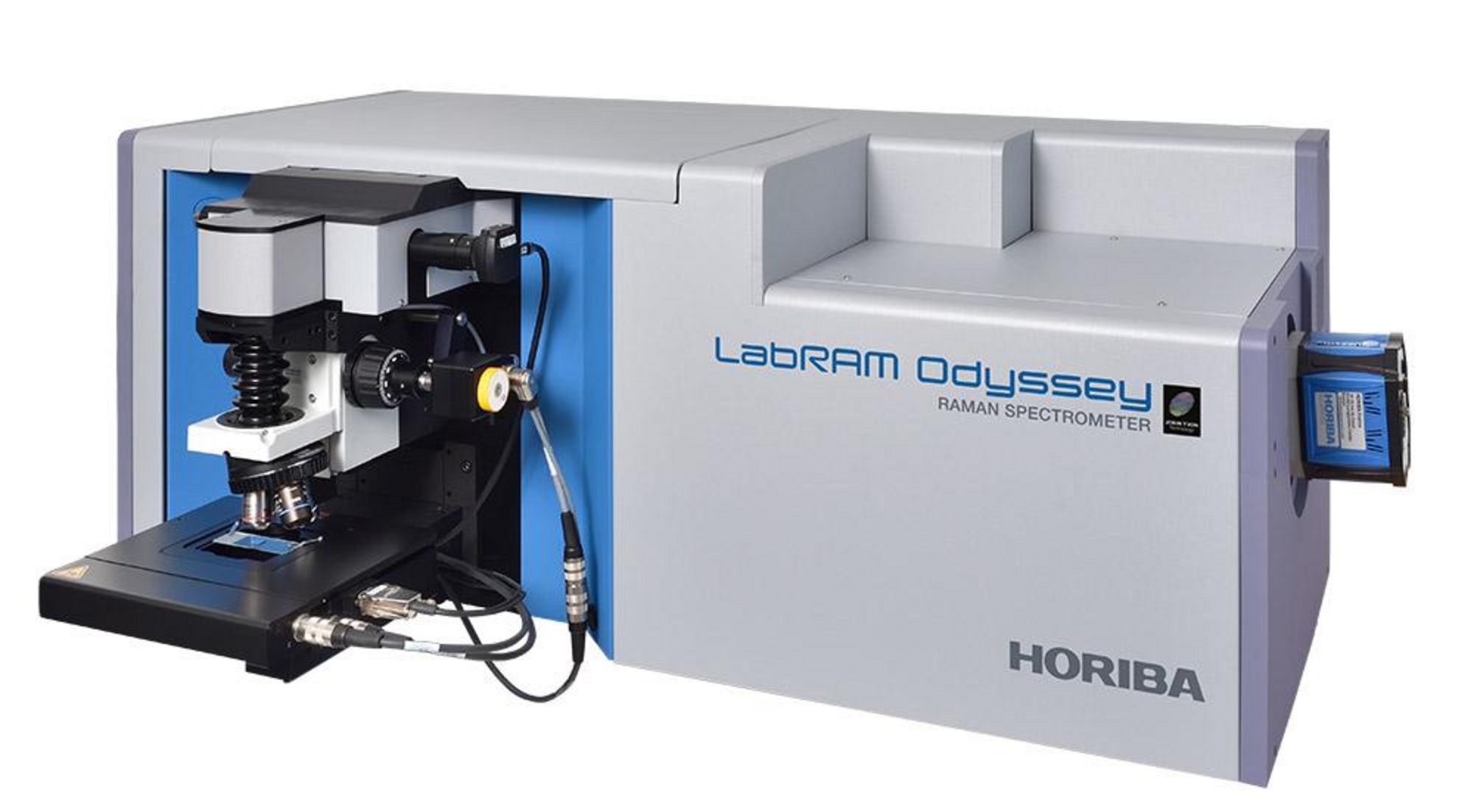
HORIBA is a leading provider of analytical and scientific instrumentation, renowned for its innovative technologies and reliable performance. HORIBA’s Raman spectrometers are at the forefront of molecular analysis and characterization and offer precise and reliable measurements, allowing researchers and industrial users to gain valuable insights into molecular structure, composition, and dynamics. With advanced features, user-friendly interfaces, and a commitment to excellence, they are trusted tools for a wide range of applications.
如您有任何疑問,请在此留下詳細需求或問題,我們將竭誠您服務。