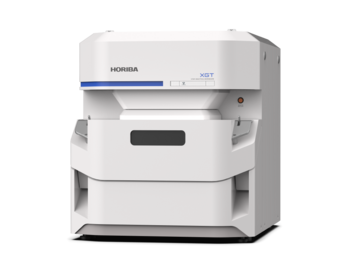
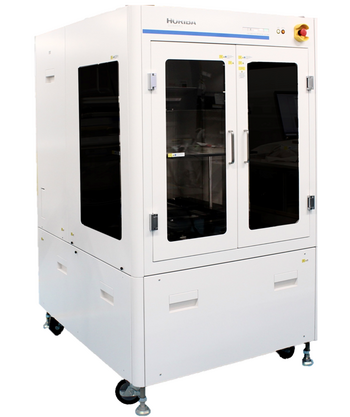
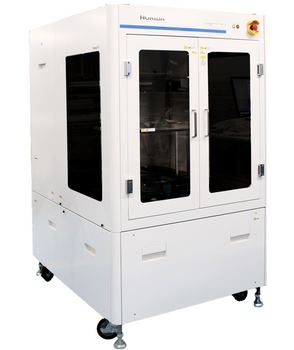
XGT-9000SL

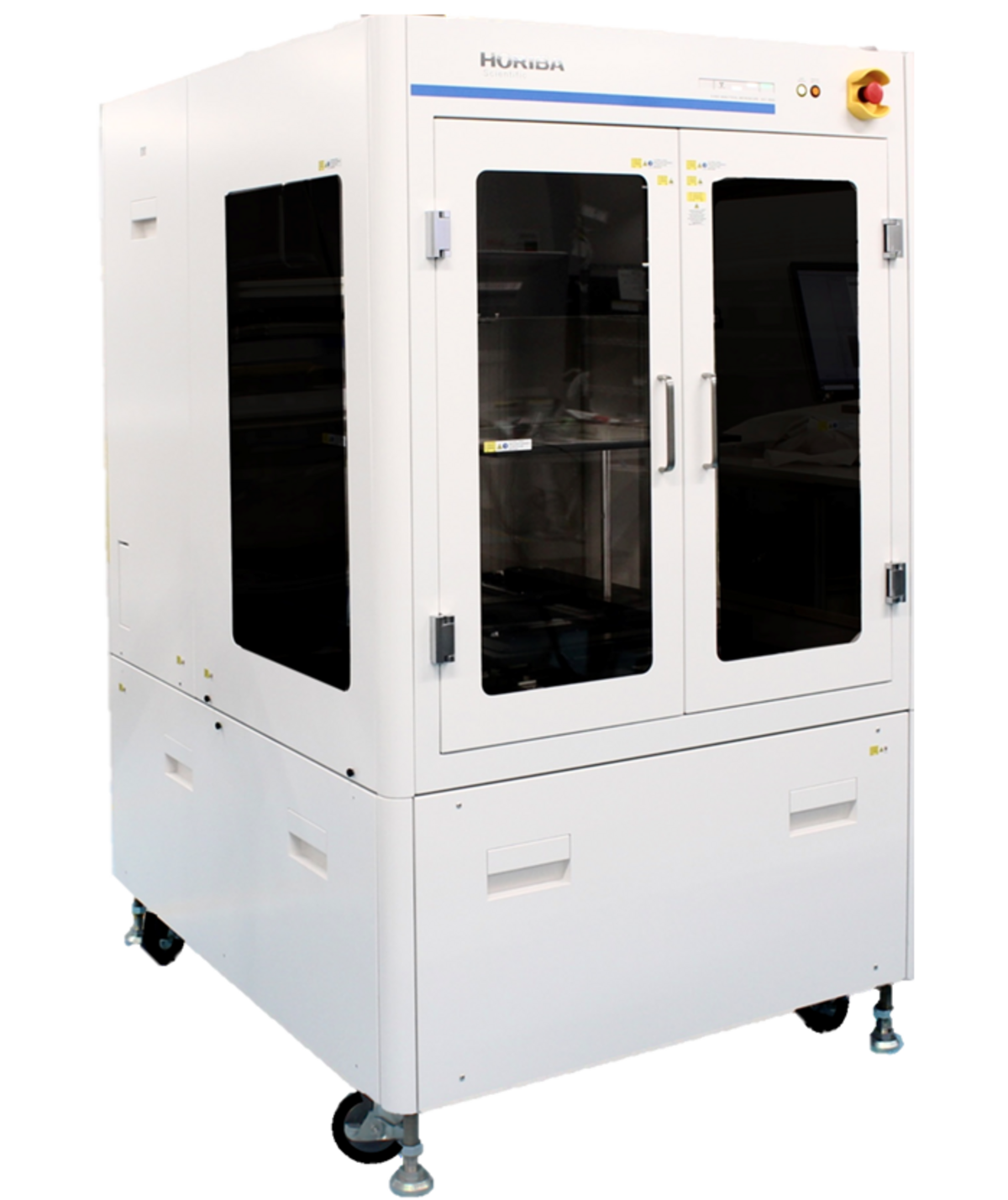
X선 분석 현미경 초대형 챔버 모델

큰 샘플에 대한 안전한 X-선 현미경 분석 가능

  • 대용량 챔버 용량(W x D x H) : 1030 mm x 950 mm x 500 mm
  • 맵핑 영역 크기 :  350 x 350 mm2
  • 감도와 공간 분해능을 저하시키지 않는 고감도의 <15 µm 스팟 사이즈
  • 투과상 및 형광 X선 동시 검출
  • JAIMAS0101-2001/IEC1010-1을 준수하는 X선 차폐로 X선 노출로부터 사용자 보호
Segment: Scientific
Manufacturing Company: HORIBA, Ltd.

Designed to revolutionize large sample analysis and expand your applications

The XGT-9000SL series has a super large chamber capacity up to 1030 mm x 950 mm x 500 mm [W x D x H] and includes a wide stage by 500 mm x 500 mm. The features enable users to analyze even sizable samples such as paintings, large printed circuit boards, and brake rotors. It is perfect for handling such large samples with ease and carried out elemental analysis on it non-destructively. It is also versatile to accommodate multiple small sized samples on the stage to carry out sequential analysis.


Dual types of detectors for fluorescent X-rays and transmission X-rays

The XGT-9000SL Series provides dual types of detectors. One is a fluorescent X-ray detector which tells the elemental distribution of a sample, and the other is a transmission X-ray detector which tells the internal structure of a sample. XGT-9000SL can get the two types of images of the same area simultaneously. Especially it is helpful for a better understanding of electronics, gemstones including inclusions, and biological specimens.
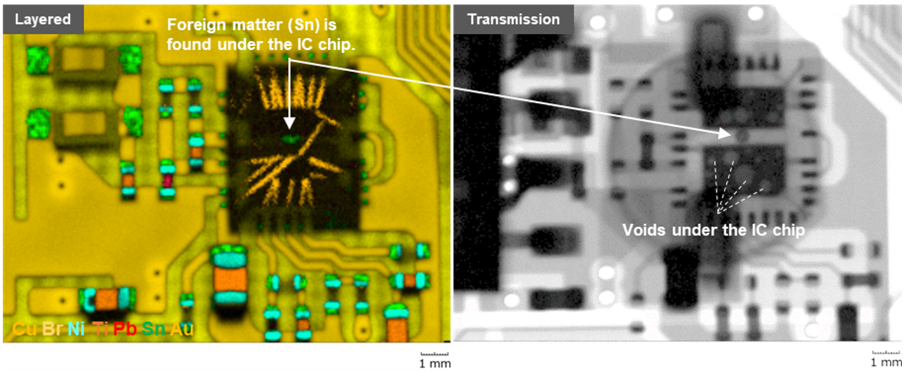
Simultaneous imaging of elemental image and transmission X-ray image of a printed circuit board
(Left) Elemental layered image revealed a foreign matter stuck under the IC chip. (Right) Transmission X-ray image revealed many voids under the IC chip.


Protect users from X-ray exposure with the X-ray shield chamber

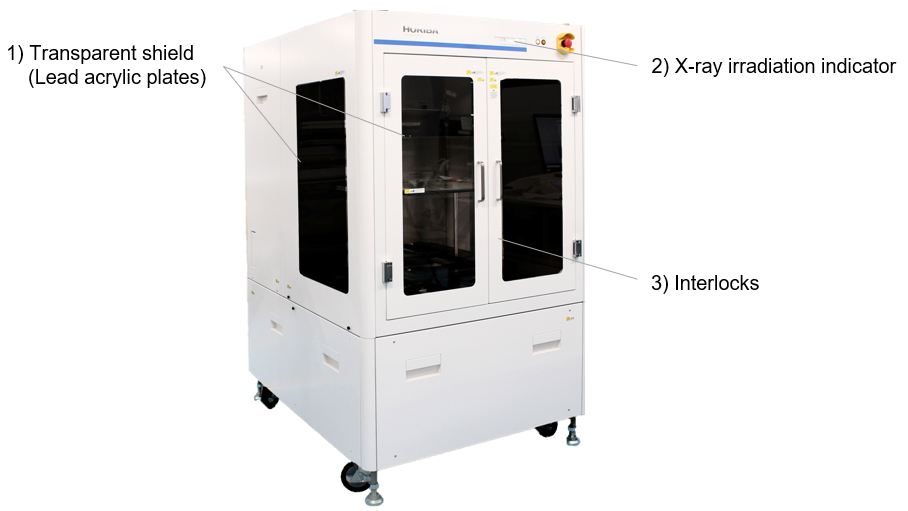
The XGT-9000SL is designed with highest level of X-ray shielding against X-ray radiations (IEC-61010-1 / JAIMAS0101-2001 compliant). With its 1) transparent shield, users can easily observe and monitor the sample in the chamber during a measurement without compromising user safety. The system also includes 2) an X-ray irradiation indicator located on the front panel alerting users when X-rays are active. Furthermore, the XGT-9000SL is equipped with 3) interlocks on the chambers doors, preventing any X-ray irradiation in the unlikely event that an user accidentally opens the door while the system is in operation.


Multiple safety functions protect your precious samples from collision risks

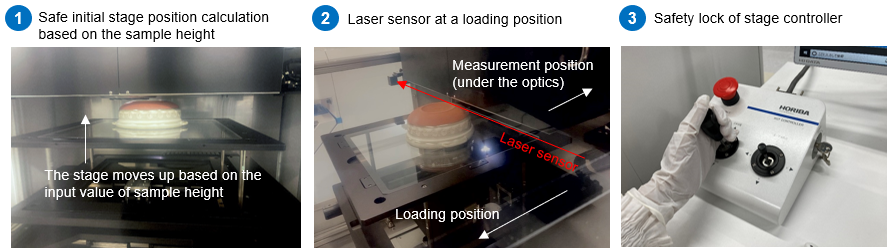
Multiple safety functions are incorporated to ensure the protection of your precious samples:

  1. Stage position calculation: The software can calculate the safe initial position based on an input value of a sample height. This means that the stage will move up and stop at the optimal position, minimizing the risk of accidental collisions with the optics or other sensitive components.
  2. Laser sensor: The system can detect interference from your samples with a laser sensor and stop the stage before your sample contacts with the optics even if an inaccurate sample height has been input.
  3. Stage lock: The XGT-9000SL Series comes equipped with a sophisticated stage controller that incorporates a safety stage lock function. Even if an user accidentally operates the stage in a wrong way, the stage will not go beyond the designated safe position.


Flexible and user-friendly software

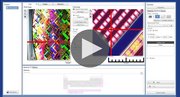
The XGT-9000SL Series software has a highly flexible and user-friendly interface. It displays data trees, optical images, spectrum results, the periodic table, and map imaging results at a glance. Users also have the flexibility to customize the on-screen layout, or even to show the results on multiple monitors. Thus, it allows users to see the results more clearly and boosts your data analysis.

Apart from the standard software functions, the advanced modules can be added to the software suite to provide more comprehensive user experiences.

  • Multilayer FPM module: for thickness measurement with/without standard samples
  • RoHS module: for RoHS screening
  • Queue module: for automated multiple measurements in unattended mode
  • Particle Finding module: for particle analysis and co localized analysis
  • LabSpec Link module: for data transfer to LabSpec 6 for multivariate analysis


Application  Examples
 

Basic information

InstrumentX-ray fluorescence analytical microscope
Sample typeSolids, Liquids, Particles
Detectable elementsF* – Am
*He purge condition is necessary to detect down to fluorine
Available chamber size1030(W) x 950(D) x 500(H)
Maximum sample size500(W) x 500(D) x 500(H)
Maximum mass of sample10 kg
Optical observationTwo high resolution cameras with objective lens
Optical designVertical-Coaxial X-ray and Optical observation
Sample illumination/observationTop, Bottom, Side illuminations/Bright and Dark fields

X-ray tube

Power50 W                                   
VoltageUp to 50 kV
CurrentUp to 1 mA
Target materialRh

X-ray optics

Number of probesUp to 4                                                                                                                     
Primary X-ray filters for spectrum optimization5 positions

Detectors

X-ray Fluorescence detectorSilicon Drift Detector (SDD)                                     
Transmission detectorNaI(Tl)

Mapping analysis

Mapping area350 mm x 350 mm          
Step size4 μm

Operating mode

               Sample environment              Partial vacuum / Ambient condition / He purged condition (optional)*
*He purge condition is necessary to detect down to fluorine.

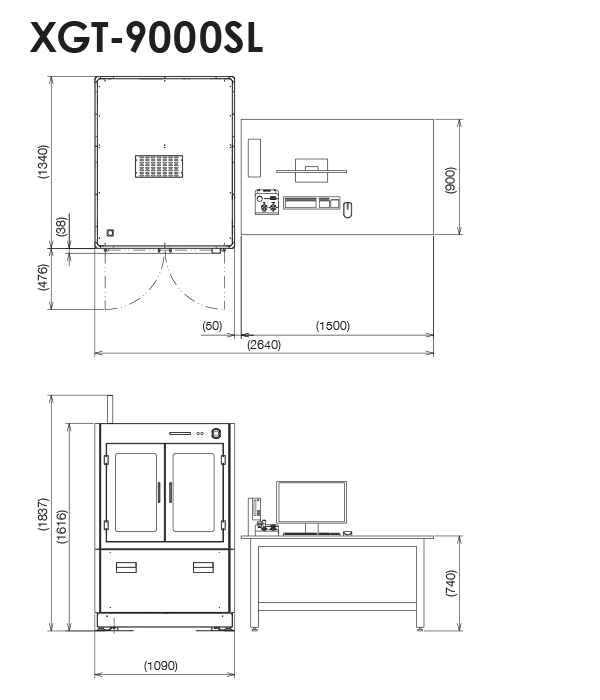
Dimensions (unit: mm)

Non-destructive elemental analysis on a Japanese sword by micro-XRF with a super large chamber
Swords are made from different materials in different eras in different countries. From an archaeological point of view, elemental analysis provides hints of the origin and the production date of a sword. It also provides hints to identify whether it’s imitation or real.
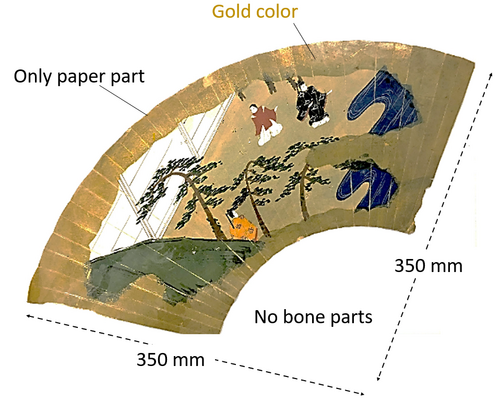
Pigment analysis on an antique paper painting by micro-XRF with a super large chamber
Identification of pigments is important in the archaeological and art research fields. Some pigments were used during specific times and then were no longer used in later times. Therefore, we can estimate the period when artwork was created through identification of the pigments. Micro-XRF is an effective pre-screening analytical technique to narrow down the candidates of multiple pigments used on a painting, thanks to its non-destructive approach and imaging capability.
Non-destructive failure analysis of a commercial PEMFC using a micro-XRF with a super large chamber
We introduce non-destructive failure analysis on a large membrane electrode assembly (MEA) from a commercial PEMFC stack using a HORIBA XGT-9000SL, a micro-XRF with an extra-large chamber capacity. Thanks to the chamber capacity, we successfully performed non-destructive elemental imaging on a defective area without cutting the sample, and we found unexpected distributions of Fe, Ni, Mn and Cr within the defective area, and that the elements are present in the MEA as a result of possible degradation of the bipolar plate.
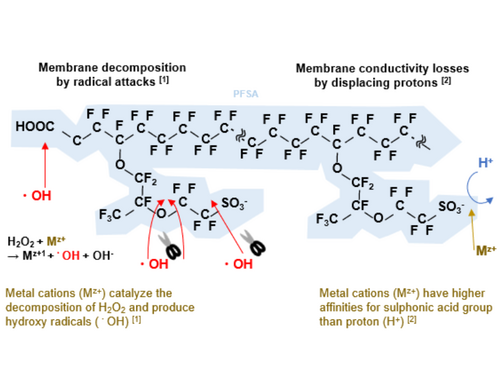
Metal elusion imaging using micro-XRF to identify the root cause of PEMFC degradation
Proton exchange membrane fuel cells (PEMFCs) are getting more and more popular as a clean energy, and a lot of research is being done to achieve better durability for further spread into more commercial phase.
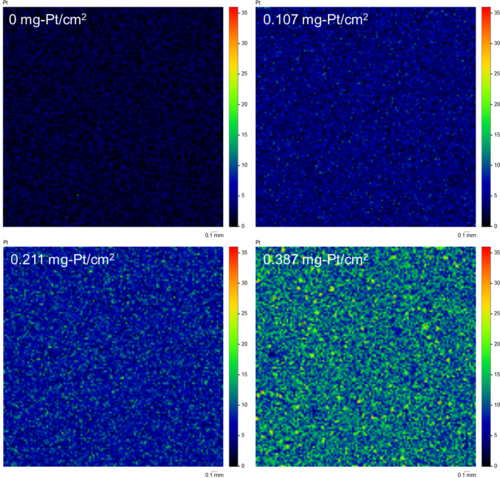
Applications of micro-XRF for PEMFC catalyst research: Pt catalyst uniformity imaging and Pt loading mass determination
The HORIBA micro-XRF system performs two applications for proton exchange membrane fuel cell (PEMFC) catalyst research: One is Pt catalyst uniformity imaging within a catalyst sheet thanks to the imaging capability. The other is Pt catalyst loading mass determination on average, which is a popular application of EDXRF. Through the experiments, we successfully visualized aggregates of Pt catalyst in our samples, and we also got a good linearity of calibration curve for Pt catalyst loading mass determination.
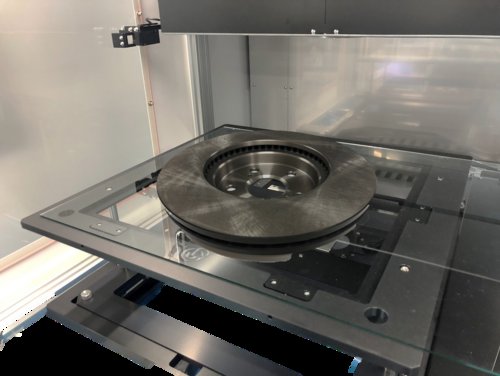
Surface analysis on a brake rotor of automotive tire
The XGT-9000SL’s large chamber capacity allows you to put whole a brake rotor and carry out spectrum analysis and elemental distribution imaging on the rotor surface, non-destructively.
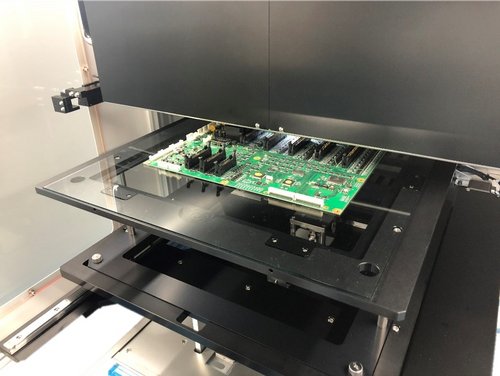
Non-destructive failure analysis on a large printed circuit board
Our XGT-9000SL allows failure analysis at a microscopic level on a large sample, non-destructively, thanks to its large chamber capacity and its microprobes.
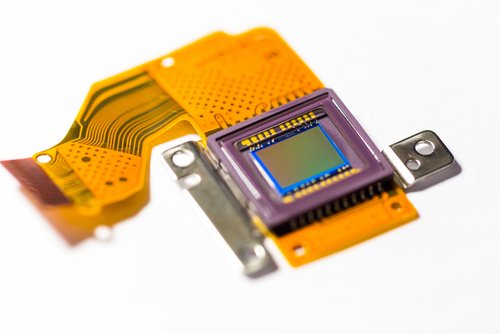
Non-destructive thickness and composition analysis of NiP/Au plating on Cu contacts using micro-XRF
We carried out plating thickness and composition analysis on dual-layer NiP/Au plating on Cu contacts on a flexible printed circuit using a HORIBA X-ray analytical microscope. We successfully detected Au of ultra-thin layer without any sample preparation. The thickness results of Au and NiP plating were consistent with the provided values and with good repeatability.
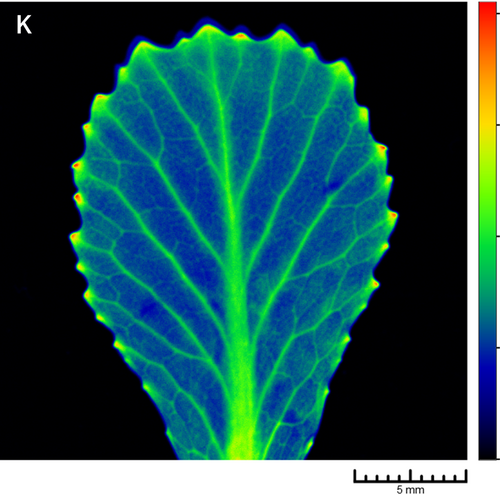
Plant science - Inorganic element imaging on a leaf using micro-XRF
A wide range of elements are present in plants. Some elements exist to play important roles as plant nutrients or enzymes, and some elements accumulate unexpectedly due to environmental pollution. While it is important to understand the bulk concentrations of individual elements from a nutritional and ecotoxicological perspective, the distribution of elements is also important for a better understanding of the mechanisms of metabolism and uptake in plants.
Gun Shot Residue analysis using X-ray fluorescence micro-analysis
Micro-XRF analysis of gun shot residues allows individual microscopic particles to be characterized for elemental composition. In addition, automated element imaging provides high spatial resolution element distribution maps, allowing particle shapes and sizes to be accurately analyzed.

제품 문의

HORIBA제품의 자세한 정보를 원하시면, 아래의 양식에 내용을 입력을 부탁드립니다.

* 는 필수입력항목입니다.

Related products

XGT-9000
XGT-9000

X선 분석 현미경(Micro-XRF)

XGT-9000SL
XGT-9000SL

X선 분석 현미경 초대형 챔버 모델

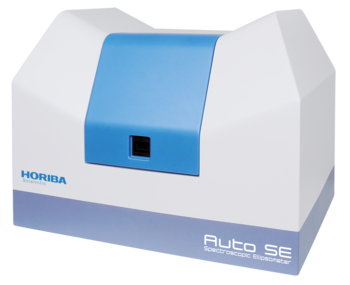
Auto SE
Auto SE

Spectroscopic Ellipsometer for Simple Thin Film Measurement

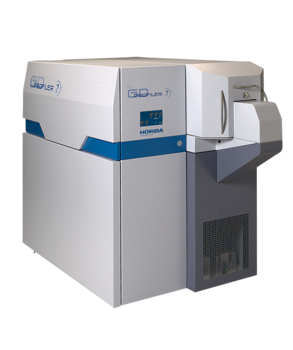
GD-Profiler 2™
GD-Profiler 2™

Glow Discharge Optical Emission Spectrometer

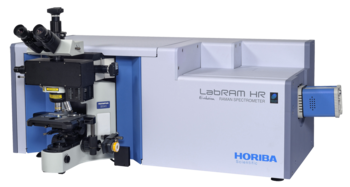
LabRAM HR Evolution
LabRAM HR Evolution

Confocal Raman Microscope

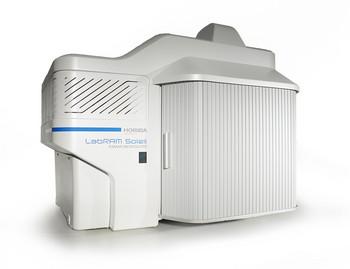
LabRAM Soleil
LabRAM Soleil

Raman Microscope

LEM Series
LEM Series

Camera Endpoint Monitor based on Real Time Laser Interferometry

MESA-50
MESA-50

X선 형광 분석기

MESA-50K
MESA-50K

X선 형광 분석기

MEXA-2000SPCS series

배기가스 고체 입자 카운팅 시스템

OBS-ONE PM unit
OBS-ONE PM unit

차량 탑재형 배기가스 측정 장치

Smart SE
Smart SE

Powerful and Cost Effective Spectroscopic Ellipsometer

Ultima Expert
Ultima Expert

고해상도, 고감도, 고안정성 ICP-OES

Ultima Expert LT
Ultima Expert LT

Affordable high performance ICP-OES

UVISEL Plus
UVISEL Plus

Spectroscopic Ellipsometer from FUV to NIR: 190 to 2100 nm

XGT-9000
XGT-9000

X선 분석 현미경(Micro-XRF)

XGT-9000SL
XGT-9000SL

X선 분석 현미경 초대형 챔버 모델

XploRA™ PLUS
XploRA™ PLUS

Raman Spectrometer - Confocal Raman Microscope

MESA-50
MESA-50

X선 형광 분석기

MESA-50K
MESA-50K

X선 형광 분석기

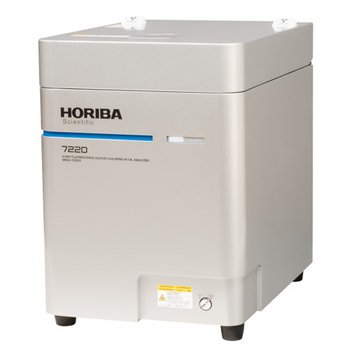
MESA-7220V2
MESA-7220V2

X선 형광 유중의 황/염소 분석기

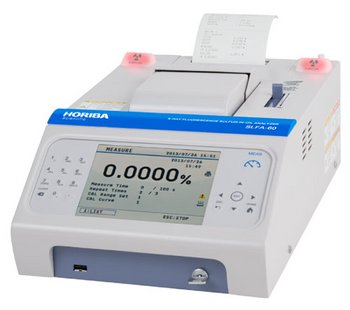
SLFA-60
SLFA-60

X선 형광 유황 분석기

SLFA-6000
SLFA-6000

X선 형광 유황 분석기

XGT-9000
XGT-9000

X선 분석 현미경(Micro-XRF)

XGT-9000SL
XGT-9000SL

X선 분석 현미경 초대형 챔버 모델