Key Takeaways
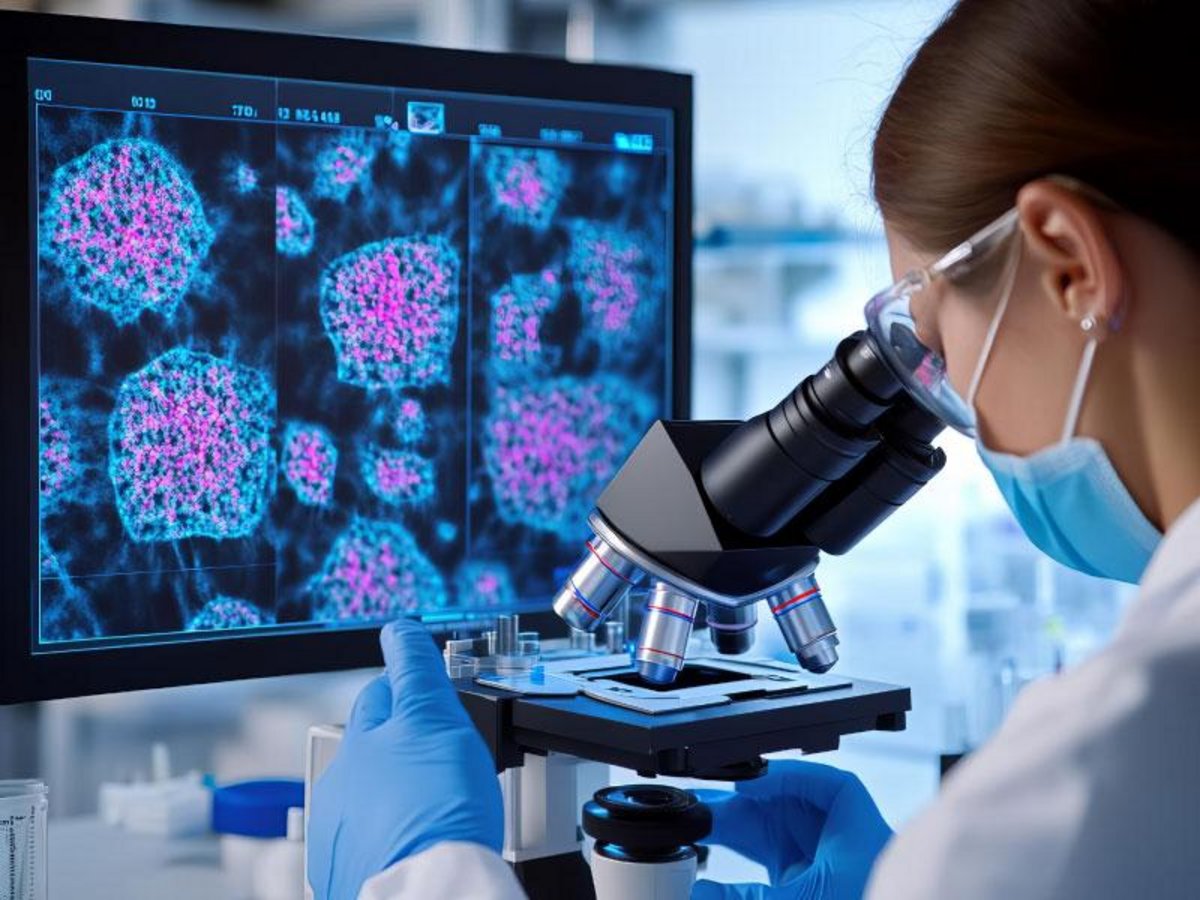
Resolving complex molecular interactions without disrupting cellular integrity is a primary challenge in analyzing Cellular Signaling Pathways. By implementing cutting-edge optical and analytical instrumentation, laboratories can overcome the structural limitations of traditional biochemical assays and fixed-cell microscopy. Utilizing advanced spectroscopy allows researchers to acquire real-time, context-rich chemical data while preserving the native physiological state of the biological sample.
Beyond ensuring high-resolution molecular localization, integrating advanced spectroscopy to map cellular structures accelerates comprehensive metabolic profiling and pathway analysis.
Read the entire article in Lab Manager at https://www.labmanager.com/strategic-investments-in-spectroscopic-cell-imaging-34213
Understanding complex intercellular communication is essential because the dysregulation of Cellular Signaling Pathways directly drives disease states in oncology, immunology, and neurology. Investigating these molecular mechanisms at a high resolution enables researchers to identify aberrant activity, facilitating the targeted development of highly specific and effective medical therapies.
Achieving label-free, real-time chemical characterization without destructive sample preparation is the primary advantage of modern spectroscopic instrumentation. These technologies probe light-matter interactions to yield precise spatial and temporal resolution, allowing for the direct observation of specific molecular interactions within living systems without the artifacts common to traditional fixed-cell methods.
Tracking the exact spatial distribution and kinetic activity of proteins requires the precise localization capabilities of Fluorescence Microscopy. By tagging targets with genetically encoded fluorescent proteins, researchers achieve high specificity to visualize the exact location, dynamic movement, and cluster formation of signaling molecules during time-lapse live-cell imaging.
Preventing measurement artifacts and sample perturbation is accomplished through the label-free chemical fingerprinting of Raman Spectroscopy. By measuring inelastic light scattering and specific vibrational modes, this technique delivers comprehensive molecular composition data, significantly reducing sample preparation time while mapping multiple biomolecules simultaneously without the interference of fluorescent tags.
Correlating specific protein localization with broader metabolic shifts requires the deep contextual biochemical mapping provided by Hyperspectral Imaging. By capturing hundreds of narrow, contiguous spectral bands, each pixel contains a full spectrum, generating rich datasets that reveal the subtle spatial distribution of various molecules and their intricate metabolic states.
Ensuring adequate computational infrastructure and workflow automation are critical when scaling up complex, high-throughput spectroscopic arrays. Lab managers must precisely define the required temporal and chemical resolution with researchers, budget for specialized software and personnel training, and prioritize modular upgrade paths to maximize the long-term return on strategic investments.
Tiene alguna pregunta o solicitud? Utilice este formulario para ponerse en contacto con nuestros especialistas.