


PDF
0,23 MB

Mediciones de vida útil de fluorescencia resueltas en el tiempo
Mediciones de vida útil de fluorescencia resuelta en el tiempo Nota Técnica

Time-Correlated Single Photon Counting (TCSPC) stands as the definitive gold-standard technique for measuring time-resolved fluorescence lifetimes across biological, chemical, and materials science applications. By measuring the arrival time of individual emitted photons relative to periodic excitation pulses, TCSPC enables ultra-precise Characterization of excited-state dynamics from the picosecond to microsecond timescale. Evaluating fluorescence decay kinetics rather than raw intensity eliminates common experimental artifacts like concentration fluctuations, photobleaching, and sample scattering, ensuring rigorous optical analysis.
Time-Correlated Single Photon Counting (TCSPC) is an optical technique that measures Fluorescence Lifetime decays by correlating high-repetition excitation pulses with single-photon arrival times at a detector. Addressing the pain point of detecting low-intensity photon signals without distortion, TCSPC constructs statistical decay histograms using a Time-to-Digital Converter (TDC) to evaluate molecular Structure and excited-state Kinetics across picosecond-to-microsecond regimes.
The technique relies on the principle that the probability of detecting a single photon at time t following an excitation pulse is directly proportional to the fluorescence emission intensity at that exact time. A pulsed light source (such as a laser diode or LED) fires millions of pulses per second into the sample. High-speed timing electronics record the delay between the excitation flash and the detection of the first emitted photon. Over many pulse repetitions, these individual timing events build up a statistical histogram representing the true exponential fluorescence decay curve.
TCSPC calculates Fluorescence Lifetime (T ) by compiling photon arrival probabilities into an exponential decay curve using high-repetition pulsed light sources (10 kHz–100 MHz). Resolving complex molecular interactions, the timing electronics measure time t between pulse excitation and photon detection, fitting the aggregated histogram to single- or multi-exponential functions to assess sample Structure and Critical Quality Attributes (CQAs).
Once sufficient statistics are collected in the histogram (typically thousands of counts in the peak channel), mathematical deconvolution algorithms fit the curve to an exponential decay model:
I ( t ) = I 0e-t/T
In heterogeneous samples containing multiple fluorophores or complex microenvironments, TCSPC resolves multi-exponential decays (T1, T2,…) to separate distinct chemical species that would otherwise overlap in steady-state spectra.
Kinetic TCSPC tracks rapid molecular processes by capturing individual fluorescence decay curves in time windows as short as 1 millisecond. By measuring lifetime shifts rather than intensity changes, this technique solves the problem of fluorophore dilution or photobleaching during real-time reactions, enabling seamless acquisition of up to 10,000 sequential measurements to monitor binding Kinetics and bioprocess evolution.
To achieve millisecond kinetic resolution, the TCSPC system utilizes high pulse repetition rates to accumulate the necessary photon statistics rapidly. Care must be taken to balance the pulse repetition rate against the sample's decay time to ensure the fluorophore completely returns to the ground state before the next excitation pulse occurs. The resulting series of decay curves forms a time-resolved kinetic trace, revealing structural changes during protein folding, enzymatic reactions, or chemical polymerization.
An effective TCSPC system requires a high-repetition pulsed excitation source (pulsed laser or NanoLED), ultra-fast single-photon detectors like photomultiplier tubes (PMTs), and precision timing electronics such as a Time-to-Digital Converter (TDC). These synchronized components solve signal-to-noise limitations in research spectrofluorometers, ensuring strict compliance with Process Analytical Technology (PAT) standards for accurate Characterization.
Pulsed Light Source: Picosecond semiconductor lasers or LEDs operating at high repetition rates (10 kHz to 100 MHz).
Detector: Fast-response photomultiplier tubes (PMTs) or microchannel plate PMTs (MCP-PMTs) capable of registering single-photon events.
Timing Electronics: Dedicated modules (such as HORIBA's FluoroHub) housing Time-to-Amplitude Converters (TAC) or Time-to-Digital Converters (TDC) to measure picosecond time intervals with high temporal accuracy.
TCSPC is preferred over steady-state measurements because Fluorescence Lifetime is an absolute, concentration-independent property that remains unaffected by intensity fluctuations. Addressing critical pain points like sample photobleaching, excitation lamp drift, and pathlength variations, TCSPC delivers robust quantitative Characterization essential for Quality by Design (QbD) protocols in biopharmaceutical and material research.
While steady-state measurements record total light output—which varies with sample concentration, cell pathlength, or instrument drift—TCSPC measures the average time a molecule remains in the excited state. Because lifetime depends exclusively on the local microenvironment (such as pH, oxygen concentration, polarity, and molecular binding), TCSPC provides unambiguous structural and environmental data even in challenging, highly scattering media.
In life sciences and materials research, TCSPC evaluates protein conformation, charge-carrier recombination in semiconductors, solar cell efficiency, and quantum dot Structure. Resolving subtle environmental changes such as local viscosity and binding, TCSPC advances Quality Assurance (QA/QC) and fundamental R&D by providing precise lifetime metrics without destructive sample consumption.
Life Sciences: Tracking protein-ligand binding, local membrane viscosity, and excited-state dynamics in biological probes.
Materials Science & Photovoltaics: Measuring charge separation efficiency, carrier lifetimes in silicon or perovskite solar cells, and photoluminescence decay in semiconductor quantum dots.
Researchers seeking detailed experimental protocols and system configurations can explore the HORIBA Fluorescence Knowledge Center for specialized application notes on time-resolved instrumentation.
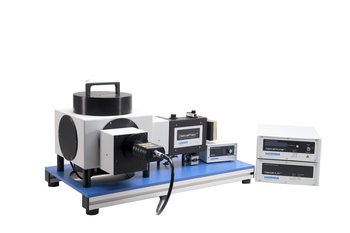
Sistema de Vida Útil de Fluorescencia TCSPC/MCS
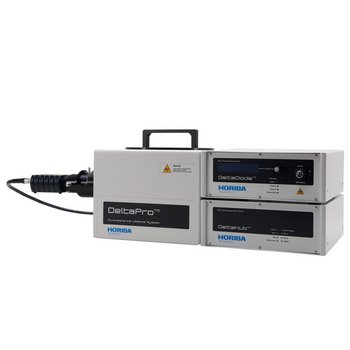
Fluorómetro de por vida del TCSPC
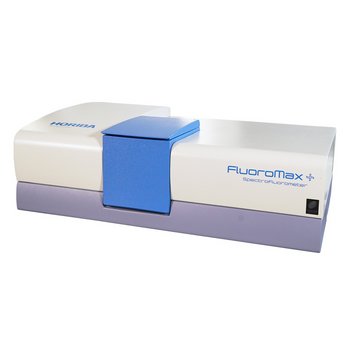
Espectrofluorómetro de Sobremesa de Estado Estacionario y de Vida Permanente
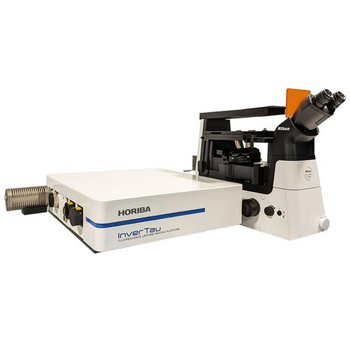
Plataforma de Imagen de Vida Prolongada de Fluorescencia
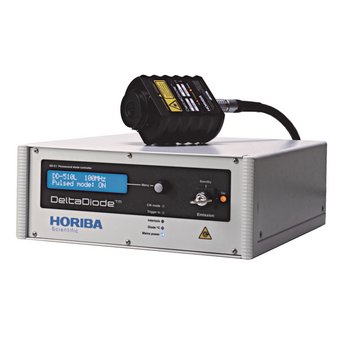
Fuentes pulsadas del TCSPC
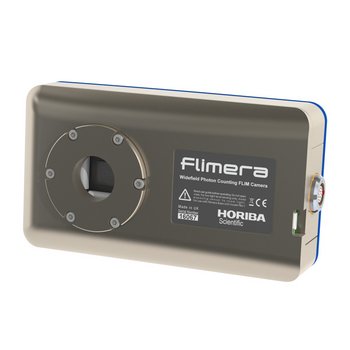
Cámara de imagen SPAD array para estudios dinámicos de FLIM a velocidades de vídeo en tiempo real
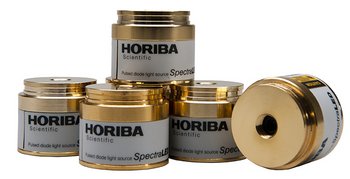
Fuentes de luz fosforescencia LED
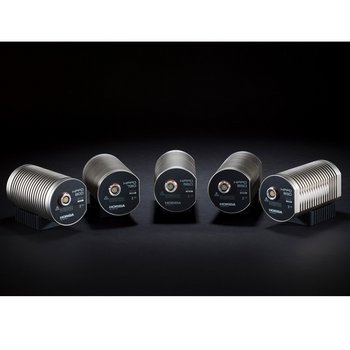
El último desarrollo de HORIBA en tecnología de detectores TCSPC
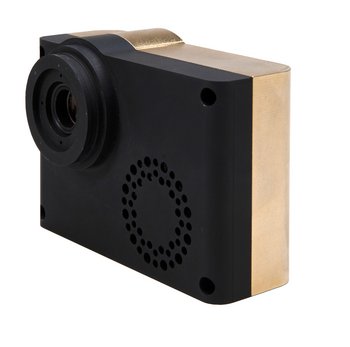
Detección de fotones individuales con precisión en picosegundos
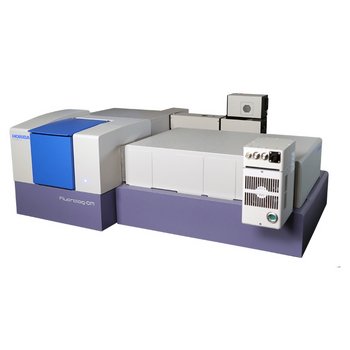
Fluorómetro de Investigación Modular para Mediciones de Vida Permanente y en Estado Estacionario
Tiene alguna pregunta o solicitud? Utilice este formulario para ponerse en contacto con nuestros especialistas.