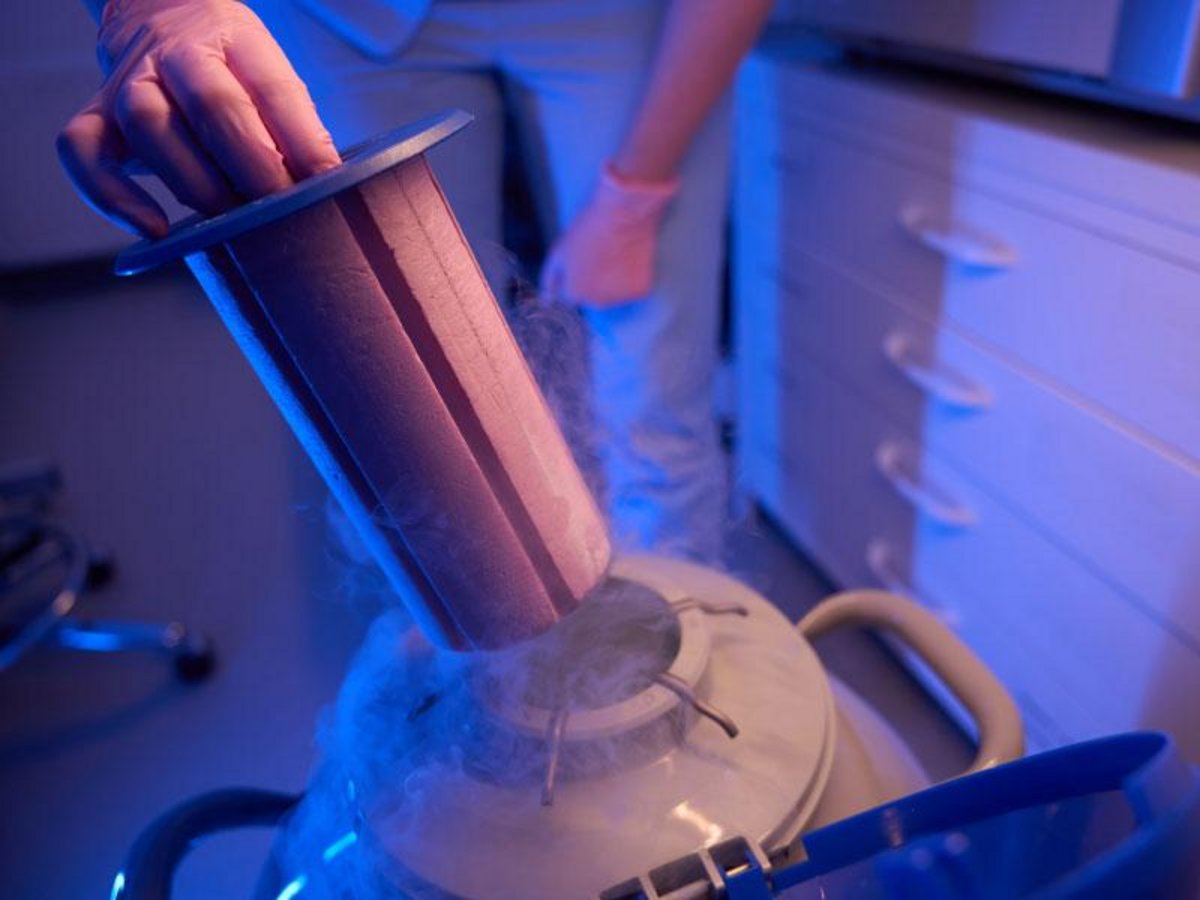
Key Takeaways
Cryogenics enhances spectroscopy by significantly improving signal-to-noise ratios, enabling high-resolution measurements, and stabilizing samples for precise analysis. By cooling materials to extremely low temperatures, researchers can "quiet" thermal noise and suppress competing energy transitions, allowing for the clear detection of specific semiconductor defect states and fundamental material properties. This approach is essential for advancing Condensed Matter Physics, Quantum Science, and high-yield semiconductor R&D in modern electronics.
Read the full story in Semiconductor Digest here.
Accurately isolating specific material energy states while eliminating overwhelming competing thermal noise is the primary purpose of applying Cryogenics to analytical chemical applications. By cooling materials to extremely low temperatures, researchers can quiet the surrounding molecular motion that crowds out the signature of the target substance. This stabilization is vital for precise Characterization in research fields like quantum science and semiconductor defect detection.
This filtering effect is analogous to isolating a single cheering fan in a loud sports stadium.
High-resolution Characterization of delicate defect states often requires specialized environments to prevent signal degradation. Customarily, researchers deploy cryogenic systems in three principal areas: Condensed Matter Physics, Semiconductor Defect Detection, and Quantum Science. These fields demand environments ranging from below -150 degrees Celsius down to microkelvin levels to properly analyze band Structure and well-defined quantum states without thermal interference.
Achieving highly sensitive Characterization without losing weak signals requires a drastically improved Signal-to-Noise Ratio (SNR). Cooling analytical detectors to cryogenic temperatures significantly reduces thermal noise, which is the random motion of electrons caused by heat. This thermal reduction enhances the overall sensitivity of the detectors, allowing scientists to capture and analyze weaker spectral signals that would otherwise be completely lost at room temperature.
Beyond resolving thermal interference, cryogenics also plays a critical role in preserving the physical integrity of the sample itself.
Cooling volatile samples prevents reactions or degradation that could negatively alter the resulting spectral data.
Capturing sharp vibrational modes in challenging materials necessitates advanced thermal control. Integrating cryogenics with Raman Spectroscopy reduces thermal broadening and minimizes background noise, resulting in significantly clearer and more precise spectral data. This combination lowers Doppler broadening to improve resolution and allows for the accurate identification of closely spaced spectral features that are normally obscured at higher temperatures.
| Spectroscopic Technique | Primary Cryogenic Benefit |
| Infrared (IR) Spectroscopy: | Cooling these detectors improves their overall sensitivity. It also reduces background noise, which is crucial for detecting weak infrared signals. |
| X-ray Spectroscopy: | Cooling X-ray detectors, such as superconducting transition-edge sensors, significantly improves energy resolution. It also enhances detection sensitivity. |
| Nuclear Magnetic Resonance (NMR) Spectroscopy: | Cryogenically cooled superconducting magnets produce magnetic fields that are both stronger and more stable. This results in improved spectral resolution. |
Seamless Characterization across multiple spectroscopic modalities without sample repositioning streamlines complex low-temperature research. Modern turnkey solutions, like the Multimodal Microspectroscopy System (SMS), integrate sample handling and conditioning directly into the analytical measurement framework. This integrated approach allows scientists to perform various analyses, including photoluminescence and darkfield scattering, at temperatures down to 4 Kelvin without moving the Cryostat between different modalities.
Tiene alguna pregunta o solicitud? Utilice este formulario para ponerse en contacto con nuestros especialistas.