Monitoring Aquaculture Effluent Impact on Coastal Waters using A-TEEM™ Absorption and Fluorescence Spectroscopy

The rapid expansion of global aquaculture is critical for food security but poses significant environmental challenges, particularly the discharge of organic waste and inorganic nutrients into coastal ecosystems. Such effluents can lead to eutrophication, water quality deterioration, and harmful algal blooms, impacting marine environments and local economies. Traditional methods for assessing water quality, like chemical oxygen demand (COD) and total organic carbon (TOC) analysis, are often time-consuming and costly.

This application note details a more efficient and cost-effective approach using optical spectroscopic techniques to characterize dissolved organic matter (DOM) and monitor anthropogenic organic pollutants from aquafarms. By analyzing the optical properties of chromophoric DOM (CDOM) and fluorescent DOM (FDOM), alongside dissolved organic carbon (DOC) and total dissolved nitrogen (TDN), researchers can gain rapid quantitative and qualitative insights into pollution sources and distribution. This approach was successfully applied to coastal aquafarms on Jeju Island, South Korea, where environmental issues associated with aquaculture effluent, such as macroalgal blooms, have become a growing concern.

Application Downloads

Related Products

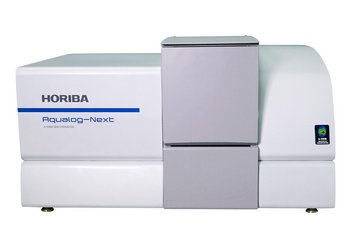
Aqualog®-Next: 水质分析的强力工具

开启水质与环境健康研究的全新视野

留言咨询

如您有任何疑问,请在此留下详细需求信息,我们将竭诚为您服务。

* 这些字段为必填项。

Corporate