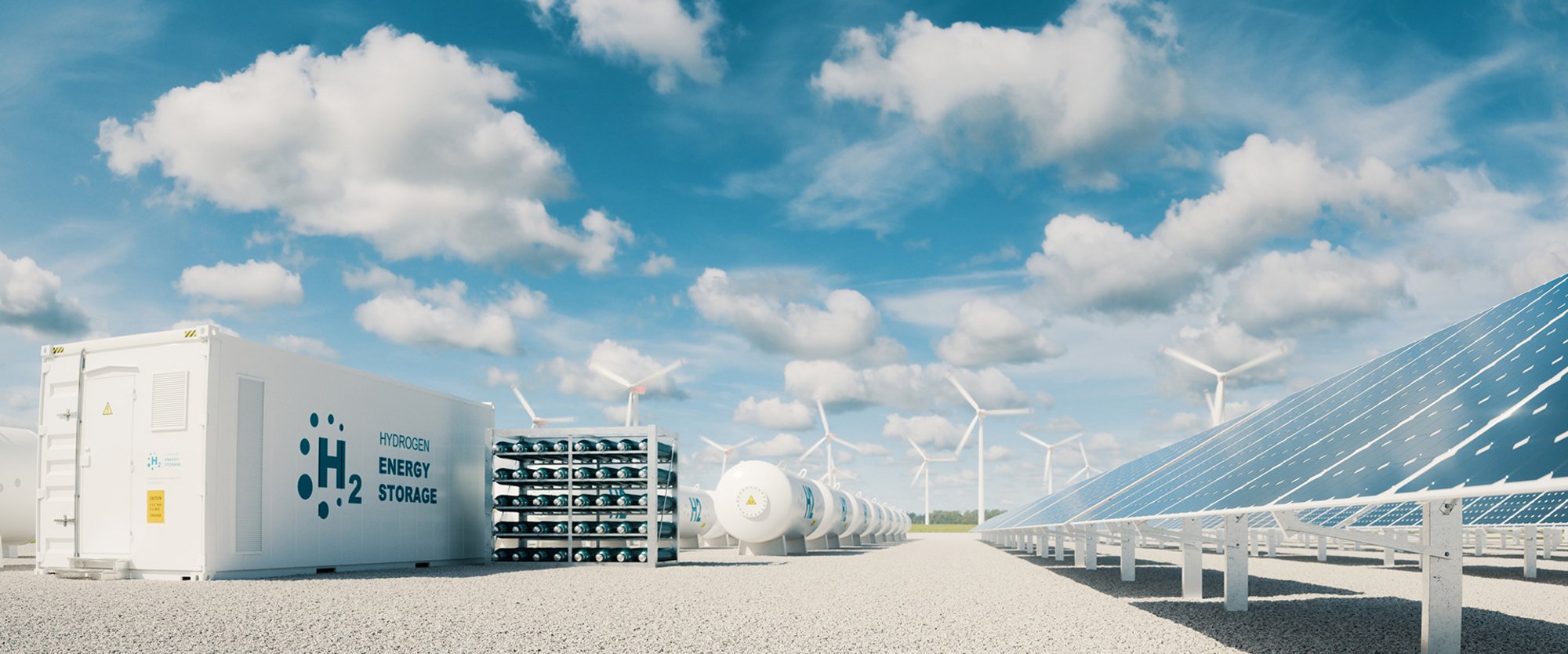
HORIBA supports the development of stationary fuel cells with a wide range of analysis and measurement technologies, including the measurement of impurity gases during fuel reforming, the effects of impurities on fuel cell materials, and the evaluation of overall fuel cell performance.
A stationary fuel cell is a device that generates electricity by reforming city gas or LPG to extract hydrogen (H2) and supply it to a fuel cell. The generated electricity and exhaust heat are supplied to homes, buildings, and factories near the installation site.
As a distributed power generation system for homes, buildings, and factories, the stationary fuel cells are expected to reduce CO2 emissions because of their high efficiency of fuel cell power generation and low transmission loss compared to conventional power generation system. Fuel cells for home use have already been commercialized and in recent years, fuel cells for commercial and industrial use have also begun to spread.
Various types of fuel cells such as SOFC, PEFC, and MCFC (Molten Carbonate Fuel Cell) are used depending on the application of the facility using electricity. For commercial and industrial use, biogas and hydrogen fuel cells are also in practical use.
Table of Contents
- "Measurement and Analysis" Required for Stationary Fuel Cell Evaluation
- Evaluation of stationary fuel cell
- Real-time impurity gas concentration measurement
- Gas and Water Analysis Related to Fuel Cells
- Powering SOFC/SOEC Manufacturing with Precision and Efficiency
- SOFC and SOEC Development Solutions to Accelerate Time-to-Market
- Engineering Support
- Find Us on YouTube