O mapa Raman registrado no cátodo após o processo de carga/descarga mostra claramente a presença de dióxido de cobalto.
The Lithium-ion batteries (LIB) have garnered a lot of interest over many years because they are a rechargeable type of battery, contrary to Lithium batteries. They are widely used in all kinds of portable electronic devices and cordless tools, and they are used in newly developed electrical cars. As the need for power of all these devices is growing with their complexity, the performance of Li-ion batteries becomes an issue.
Their performance will be influenced by the state of the cathode and the anode. During the charging and discharging process, the lithium ions travel from one electrode to the other (through the electrolyte), which induces the structural changes of both materials. Ideally, all observed changes are reversible, but in some cases, the charging/discharging process can provoke irreversible changes in the cathode or anode.
Raman spectroscopy gives a direct answer about structural changes occurring in analysed materials. Being contactless and fast, it does not influence the samples, and in the case of batteries, allows real-time analysis during the charge/discharge cycle. Easy-to-use, but still information-rich, Raman spectroscopy is an excellent tool on several analyses levels, from R&D needs to automatic quality control measurements.
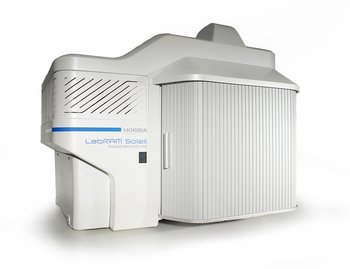
Espectroscópio Raman - Microscópio de Imagem Automatizado
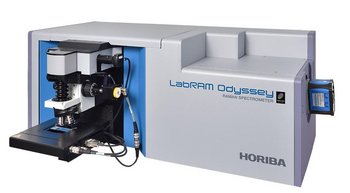
Espectrômetro confocal Raman e de alta resolução
Você tem alguma dúvida ou solicitação? Utilize este formulário para entrar em contato com nossos especialistas.