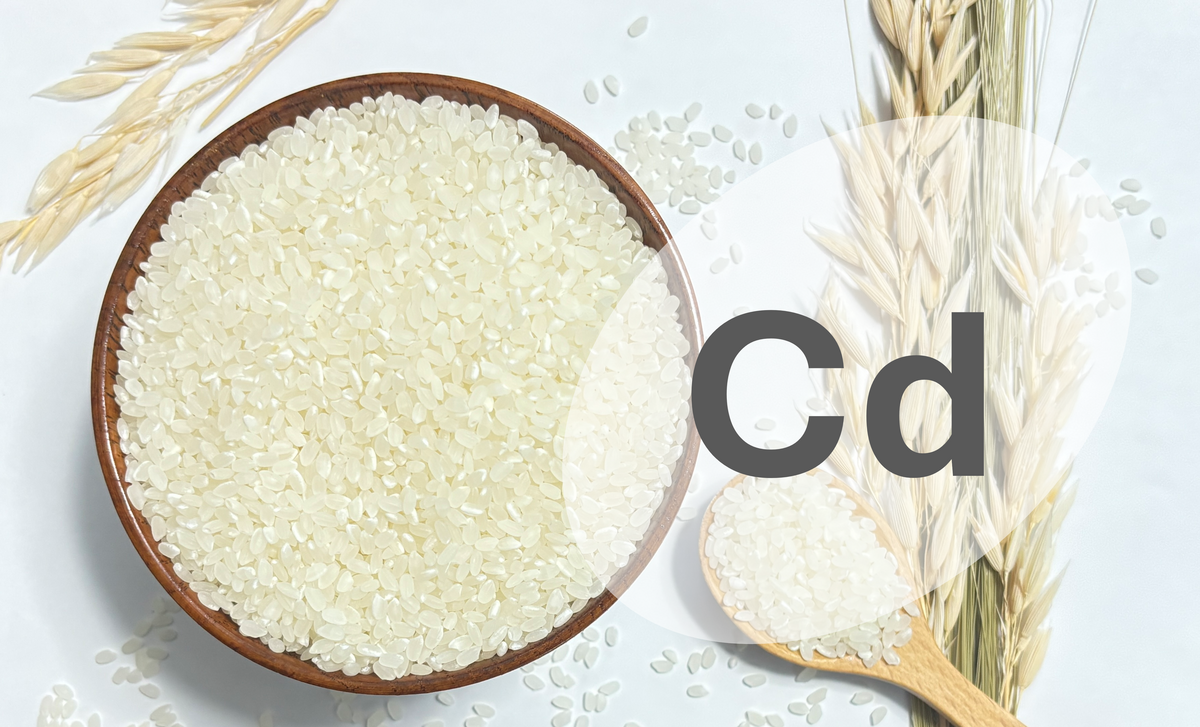
Cadmium (Cd) is a naturally occurring heavy metal that can be absorbed by rice plants from soil, and subsequently accumulates in rice grains. To help ensure food safety, the Codex Alimentarius Commission has established an international maximum level of 0.4 mg/kg for cadmium in polished rice. As a result, elemental analysis is required to verify compliance with this regulatory limit.[1][2]
ICP-OES, ICP-MS, and atomic absorption spectroscopy (AAS) are widely used for cadmium analysis in food samples. These techniques offer high sensitivity; however, they typically require specialized sample preparation procedures, such as acid digestion, which can be time-consuming and labor-intensive.
In contrast, X-ray fluorescence (XRF) enables the direct analysis of solid and powdered samples, significantly reducing sample preparation requirements. Among XRF techniques, energy-dispersive X-ray fluorescence (EDXRF) has traditionally faced sensitivity limitations. However, advances in optical system design have enabled high-sensitivity EDXRF instruments to perform screening analysis at cadmium concentrations relevant to regulatory limits for rice. As a result, EDXRF is attracting increasing attention as a rapid screening method capable of evaluating large numbers of samples in a short period of time.[3]
If you are looking for an EDXRF analyzer capable of screening cadmium in rice at levels relevant to regulatory limits, please contact HORIBA.
Reference
[1] Codex Alimentarius Commission, General Standard for Contaminants and Toxins in Food and Feed (CXS 193-1995), https://codex.fao.org/
[2] 農林水産省, 「食品中のカドミウムに関する基準値」https://www.maff.go.jp/j/syouan/nouan/kome/k_cd/04_kijyun/01_int.html (Accessed Oct. 23, 2026)
[3] T. Inui, T. Nakamura, Analysis of Cadmium in Rice by Atomic Absorption Spectrometry and X-Ray Fluorescence Spectrometry: A Review, Advances in X-Ray Chemical Analysis, Japan, Vol.46, 2015, pp.59-66.
Tiene alguna pregunta o solicitud? Utilice este formulario para ponerse en contacto con nuestros especialistas.