The Raman effect is one of the most powerful phenomena in optical spectroscopy, providing a direct fingerprint of the molecular structure, composition, and crystallinity of materials. It is based on the inelastic scattering of light, where a small fraction of photons exchanged with a sample gain or lose energy through interactions with molecular vibrations, phonons, or other excitations. Unlike fluorescence, which involves electronic transitions, Raman scattering probes vibrational energy levels, making it highly specific to the chemical bonds present in a material.
The phenomenon was discovered in 1928 by the Indian physicist Sir Chandrasekhara Venkata Raman and his collaborator Kariamanickam Srinivasa Krishnan. While studying the scattering of sunlight and monochromatic light in liquids, they observed that a very small portion of the scattered light exhibited wavelengths different from that of the incident beam. This groundbreaking discovery demonstrated that light could exchange energy with matter during scattering, earning C. V. Raman the 1930 Nobel Prize in Physics, the first Nobel Prize awarded to an Asian scientist in the sciences.
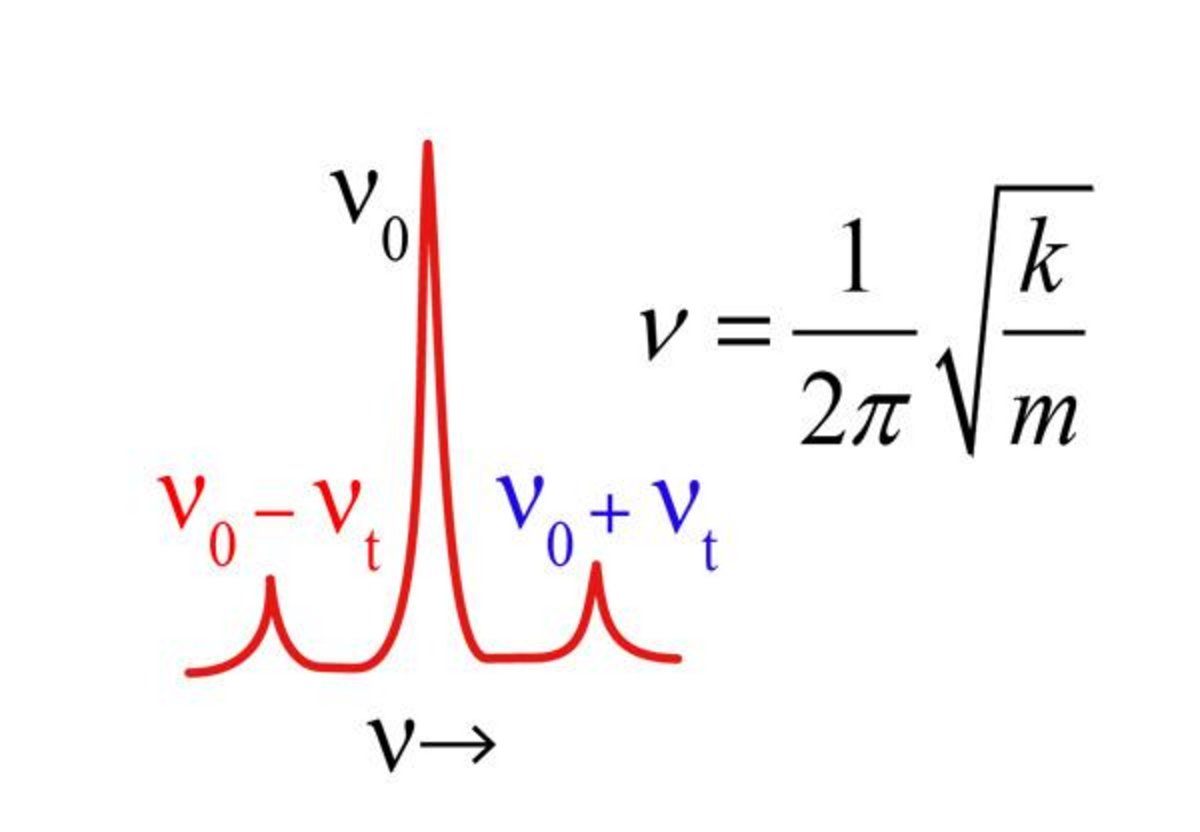
In a Raman experiment, a monochromatic laser illuminates the sample. Most photons are elastically scattered without changing energy (Rayleigh scattering). However, approximately one photon in every million undergoes Raman scattering, resulting in an energy shift corresponding to the vibrational modes of the material. These energy differences are expressed as the Raman shift, measured in wavenumbers (cm⁻¹) relative to the excitation laser wavelength rather than as an absolute wavelength. (See picture.)
Two types of Raman lines are observed. Stokes lines occur when photons lose energy by exciting molecular vibrations, producing peaks at positive Raman shifts. Anti-Stokes lines arise when photons gain energy from molecules already in an excited vibrational state, leading to negative Raman shifts. Because most molecules are initially in their ground vibrational state at room temperature, Stokes lines are significantly more intense and are the primary source of analytical information.
See also:
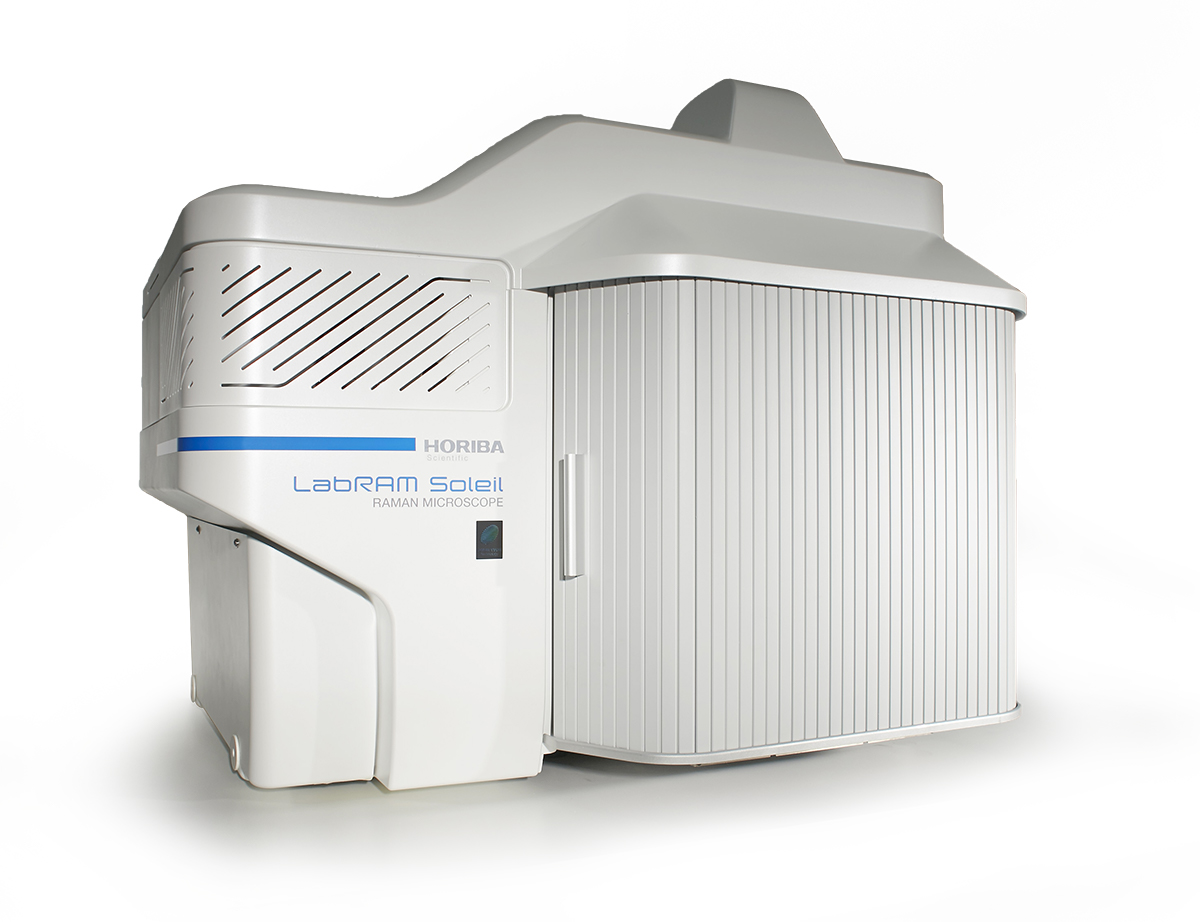
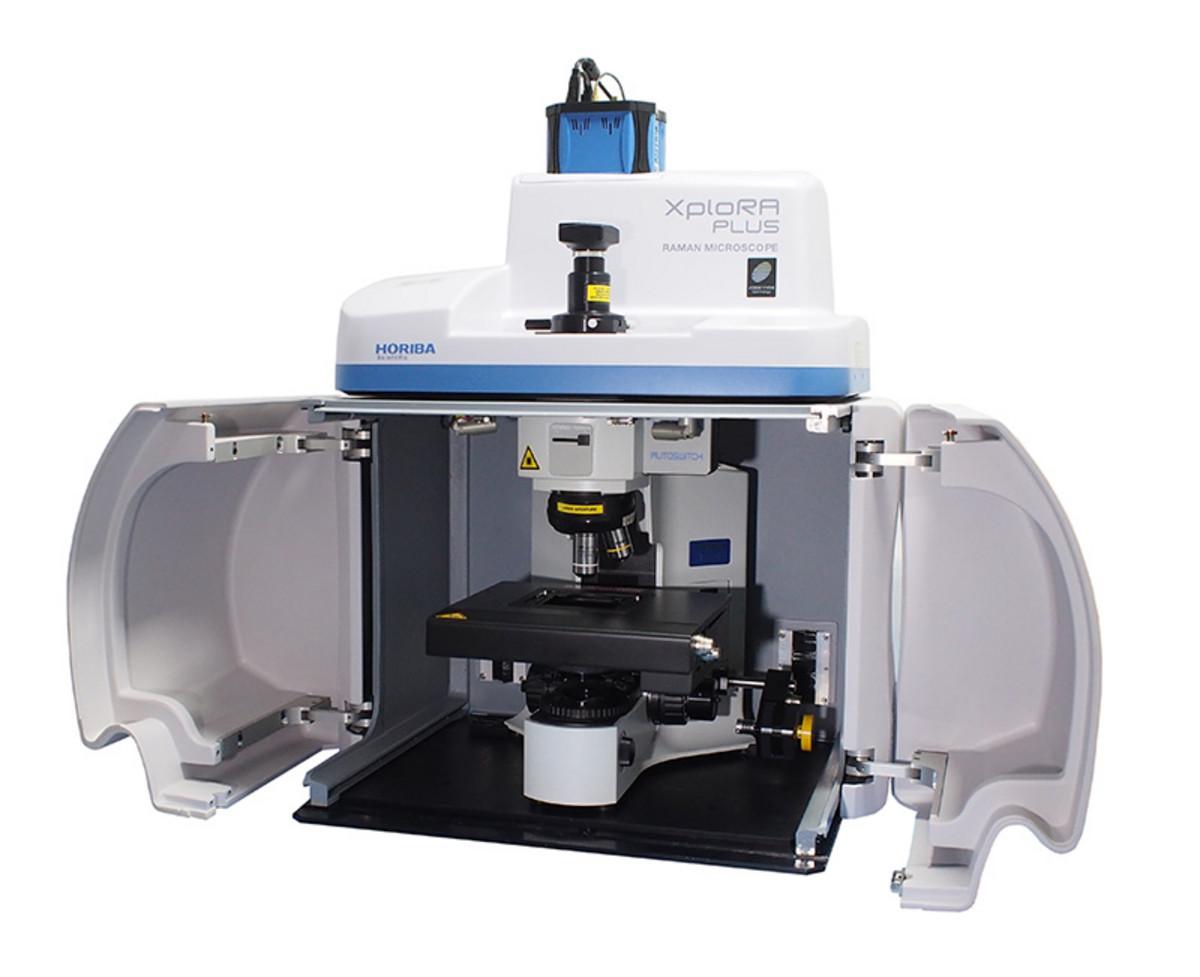
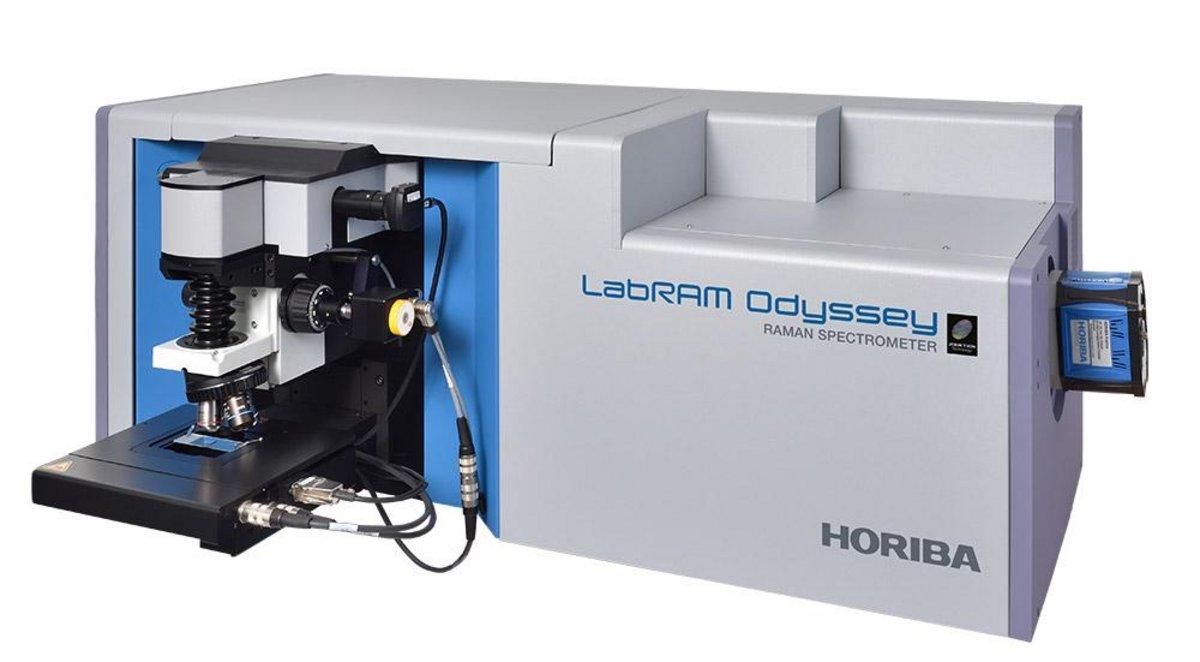
HORIBA is a leading provider of analytical and scientific instrumentation, renowned for its innovative technologies and reliable performance. HORIBA’s Raman spectrometers are at the forefront of molecular analysis and characterization and offer precise and reliable measurements, allowing researchers and industrial users to gain valuable insights into molecular structure, composition, and dynamics. With advanced features, user-friendly interfaces, and a commitment to excellence, they are trusted tools for a wide range of applications.
Tiene alguna pregunta o solicitud? Utilice este formulario para ponerse en contacto con nuestros especialistas.