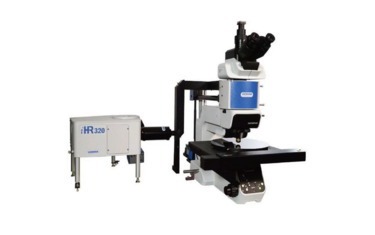
光谱分析

Technology to analyze materials by using ultraviolet, visible, and near-infrared light

Spectroscopic analysis utilizes the property of substances to absorb and emit light of specific wavelengths. It is an analytical method that examines the types and amounts of elements contained in a substance by separating the patterns of "light" emitted or absorbed by the substance. By examining the wavelengths (spectrum) specific to the molecules that make up the substance, it is possible to identify the type of element and measure its amount from the intensity of the light.

Optical Emission Spectroscopy (OES)
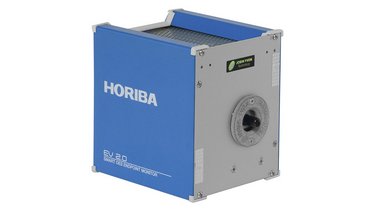
Plasma is a state that is much more reactive than other states. Taking advantage of this property, plasma is used in a variety of industries. In semiconductor manufacturing processes, plasma technology is used in a wide variety of manufacturing processes, including film deposition and etching. It is a technology that can be used for a wide range of applications, from research and development of various plasma chambers to production lines, including process endpoint detection, condition management, and plasma diagnostics.
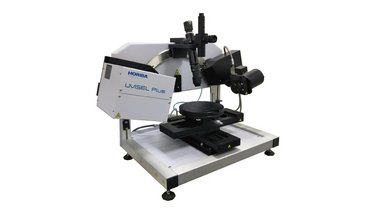
Spectroscopic Ellipsometry

Ellipsometry has been used in the semiconductor industry to measure transistor gate insulating films and photoresists. In the 21st century, it has been widely used to evaluate optical, communication, and power devices based not only on Si but also on SiGe, Ge, and compound semiconductors (GaAs, GaN, SiC, etc.). It is used for a wide range of purposes, not only to speed up research and development, but also to improve production yields and quality control. 

Raman Spectroscopy

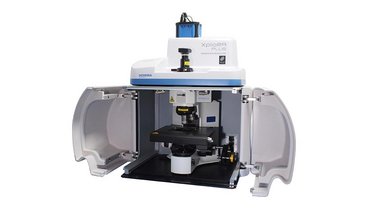
Raman Spectroscopy is a non-destructive chemical analysis technique which provides detailed information about chemical structure, phase and polymorphy, crystallinity and molecular interactions. It is based upon the interaction of light with the chemical bonds within a material.

Photoluminescence (PL)

Photoluminescence spectroscopy, often referred to as PL, is when light energy, or photons, stimulate the emission of a photon from any matter.  It is a non-contact, nondestructive method of probing materials. In essence, light is directed onto a sample, where it is absorbed and where a process called photo-excitation can occur. The photo-excitation causes the material to jump to a higher electronic state, and will then release energy, (photons) as it relaxes and returns to back to a lower energy level. The emission of light or luminescence through this process is photoluminescence, PL.

▶ Technology

Corporate