HORIBA
Search English
China
  • 产品
    • 汽车
    • 能源与环境
    • 生命科学
    • 医疗
    • 材料
    • 半导体
    • 全部产品
  • 应用
    • 艺术品/博物馆
      • 文物保护
      • 博物馆、历史遗址和类似机构
    • 制药与生物制药
    • 生物技术与生物医学
    • 化妆品
    • 教育、研发及政府机构
      • 研究所及分析测试中心
    • 能源与环境
      • 为什么选择HORIBA
      • 氢能
        • 全球合作
        • 全球碳中和趋势与战略
        • 燃料电池性能评估
        • FCV 燃料电池车评估
        • 固定式燃料电池
        • Sintering and Reduction Test Station
        • 火力发电中氢/氨燃料发动机、燃气轮机的测量与评估
        • 加氢站
        • 电解水
        • 氢气制造
      • 优化能源利用
        • 能源管理系统 (EMS)
        • 环境影响评估
        • 电池制造与回收
      • 碳捕集和利用
        • 二氧化碳分离/捕集与封存
        • 直接碳捕集
        • 碳回收
      • 煤炭和消耗性燃料
      • 电气设施
      • 能源燃油
      • 环境评估
      • 石油和煤炭产品制造业
        • 石油化工
      • 光伏
      • 石油和天然气
      • RoHS和 ELV
    • 食品和饮料
    • 医疗诊断
    • 工业
      • 电池
      • 商业及专业服务
        • 气体质量流量控制与测量和对PM2.5参考值的测量
      • 建筑与工程
      • 电气设备
      • 机械
    • 信息科学
      • 半导体
        • 二维材料
        • 石墨烯
        • 光伏
        • 显示技术
        • 数据存储
        • 纳米材料
      • 半导体制程
      • 信息设备
    • 材料
      • 碳材料
      • 聚合物分析
      • 半导体原材料
      • 金属
      • 矿物
      • 腐蚀
      • 陶瓷
      • 玻璃
      • 化学
      • 化工生产
      • 建筑材料
      • 包装材料
      • 纸,林业制品
      • 材料研究
      • 光伏
      • 法庭科学
    • 交通出行及运输
      • 汽车制造
      • 发动机、涡轮机和动力传动设备制造
      • 实际驾驶排放
      • 智能试验室
      • 海运
    • 废物管理
      • 固体废物燃烧、管理
      • 废水管理和修复服务
        • 废水和土壤分析
        • 废水处理
      • 塑料垃圾
    • 水质
      • 饮用水处理监测
      • 水循环
        • 水质检测
  • 技术
    • 元素分析
      • 电感耦合等离子体发射光谱仪 (ICP-OES)
        • 电感耦合等离子体发射光谱仪 (ICP-OES)
        • HORIBA ICP 等离子体发射光谱仪
        • ICP-OES 的主要应用领域有哪些?
        • ICP-OES 与其他技术的区别
        • 原则和理论
        • 仪器组成及原理
        • 激发源
        • 色散系统
        • ICP-OES 的检测系统
        • ICP-OES 的性能
      • 碳/硫和氧/氮/氢分析
    • 体外诊断技术
      • MDSS微量分血技术
      • 网织红细胞分析技术
      • CRP
      • 全自动推染片系统
      • 结果管理
      • 吸光度
      • 荧光分析技术
      • 流式细胞术
      • 阻抗法
      • 沉降作用
      • 分光光度法
      • 电位分析法
      • 体外诊断技术
      • 凝固法
      • 免疫比浊法
      • 显色法
    • 颗粒表征
      • 动态光散射(DLS)粒径分布分析
      • 分子量
      • 纳米颗粒追踪分析技术
      • 静态光散射(SLS)/激光衍射粒度分布分析
      • Zeta 电位:原理、计算与分析
      • 离心式沉降法
    • 流体控制
      • 临界化学过程的汽化
      • 科里奥利力测量原理
      • 流体控制
    • 显微&成像
      • 纳米拉曼(AFM-Raman)
        • 什么是AFM/Raman同区域成像?
        • 什么是针尖增强拉曼光谱?
        • TERS 能够提供什么信息?
        • TERS 中拉曼信号是怎样增强的?
        • TERS 仪器的耦合方式有哪?
        • TERS 针尖的制备工艺?
        • TERS 测试需要什么基底?
        • 什么是用于 TERS 的扫描探针显微镜反馈?
        • 什么是 TERS 的空间分辨率?
        • 怎样定义 TERS 的增强因子?
        • 什么是非线性 TERS?
        • 什么是 TERS 退解问题和虚假信号 ?
        • TERS 在材料科学中主要有哪些应用?
        • TERS 在生命科学中主要有哪些应用?
        • 参考文献
        • 相关仪器
      • 原子力显微镜(AFM)
      • 阴极荧光光谱
      • 颗粒图像分析
      • 显微X射线荧光
      • 拉曼光谱
    • 光谱技术
      • 阴极荧光光谱
        • 阴极荧光光谱
        • 电子显微镜
        • 扫描电子显微镜、环境扫描电子显微镜、聚焦离子束扫描电子显微镜和(扫描)透射电子显微镜的主要区别是什么?
        • 电子显微镜扩展探头
        • SEM-阴极荧光光谱(SEM-CL)
      • 纳米拉曼(AFM-Raman)
      • 探测器
      • 衍射光栅的50年历程
      • 全息光栅和刻划光栅
      • 荧光光谱
        • 荧光光谱
        • 荧光光谱的基本理论
        • 什么是雅布朗斯基图?
        • 什么是荧光测试技术?
        • 稳态荧光技术
        • 什么是荧光各向异性 ?
        • 什么是发光量子产率?
        • 什么是比率荧光?
        • 什么是三维荧光 (EEM,激发发射矩阵 )?
        • 什么是 A-TEEM 光谱 ?
        • 什么是单线态氧?
        • 如何计算信噪比
        • 荧光寿命技术
        • 荧光光谱仪及相关产品
      • HORIBA下一代的红外气体分析技术IRLAM
        • 光学组件
        • 浓度计算算法
        • 应用领域
      • 拉曼光谱
        • 拉曼光谱
        • HORIBA 拉曼创新 50年回顾
        • 拉曼光谱应用领域概述
        • 与其他技术对比
        • 拉曼分析技术
        • 采集拉曼光谱成像和剖面图
        • 拉曼联用技术
        • 共焦显微拉曼光谱
        • 硬件技术
        • 拉曼分析技术
        • 图片库
        • 相关产品
      • 光谱仪、单色仪和摄谱仪
        • 单色仪系统光学元件
        • 光谱带宽和分辨率
        • 阶次、分辨率和色散值
        • 如何选择单色仪和摄谱仪
        • 光谱仪的光通量和光展量
        • 光学信噪比和杂散光
        • 入口光学
        • 光谱仪、单色仪和摄谱仪相关产品
      • 椭圆偏振光谱
        • 椭圆偏振光谱仪:基本概念
        • 椭圆偏振光谱的优势
        • 仪器介绍
        • 测量技术
        • 数据分析
        • 什么是柯西色散模块?
        • 椭圆偏振光谱仪
      • X射线荧光
  • 服务
    • 分析服务
      • 应用及服务中心
    • 标定和认证
    • 客户支持
      • HORIBA 医疗客户服务中心
      • 现场支持
      • 软件升级
    • 备件和易耗品
    • 测试和咨询
      • 测试中心
  • 企业
    • HORIBA全球
      • 主页
      • 集团主席兼CEO堀场厚致词
      • 企业概要
      • 企业哲学
      • 道德规范
      • 我们的未来 (愿景,使命,价值观)
      • 企业管理
      • 董事会成员
      • 企业文化
      • 历史
        • 1945–1960年代
        • 1970年代
        • 1980年代
        • 1990年代
        • 2000年代
        • 2010年代
        • 2020年代
      • HORIBA中国
      • HORIBA Talk
    • 活动
    • 新闻
  • 联系
    • 售后服务与支持
    • 联系我们
    • 集团公司

Glow Discharge Optical Emission Spectrometry (GD-OES) open open
  • Glow Discharge Optical Emission Spectrometry (GD-OES) I
  • Pulsed RF GDOES instrumentation
  • Products using RF GDOES
    HORIBA » 技术 » Pulsed RF GDOES instrumentation 

Pulsed RF GDOES instrumentation

GDOES unique features


HORIBA Scientific pulsed RF GDOES instruments have unique features supported by multiple patents that make them the ideal companion characterization tools to material research and elaboration.

  • The new RF pulsed source allows measuring all types of solid samples conductive or non, even fragile or heat sensitive with optimum performances.
  • The patented High Dynamic range Detectors (HDD) used in all HORIBA Scientific GD instruments allow real time, automatic optimization of the sensitivity permitting to analyze elements at trace levels in one layer and as major in a second layer without compromise or need of pre-adjustment.

  • Thickness Measurement using Depth Interferometry. The use of Differential Interferometry allows for continuous direct erosion rate and crater depth measurement along with the elemental depth profile analysis. This technique developed and patented by HORIBA Scientific is a major breakthrough for GD-OES as all the information, elemental composition and depth is now delivered in the same single experiment.


RF Pulsed source


The analytical GD plasma is a dense plasma - about 1014 (charged particles / cm3) – but incident ions bombarding the surface have a low energy – about 50 eV and due to multiple collisions they are not unidirectional. These are the reasons for fast sputtering and excellent depth resolution as well as for low surface damage compared higher energy sputtering ion beams.

In average operating conditions, metals are sputtered at a rate of 1-5 µm / minute. A 100 nm layer could be sputtered in 3s. A thermal treatment on steel in which elements diffuse down to 50 µm could be checked in 10 min.


High Dynamic range Detectors


Most instruments feature a polychromator with Paschen Runge mounting for simultaneous measurement of the elements. This is mandatory when depth profile is central as in most Pulsed RF GD OES applications: the sputtering rate being extremely fast, the optical signals change rapidly with time and ultra fast detection is required.

Our optical spectrometers include a new generation of HORIBA Scientific holographic gratings with enhanced light efficiency, notably in the VUV range for H, O, Cl etc and patended HDD detectors.
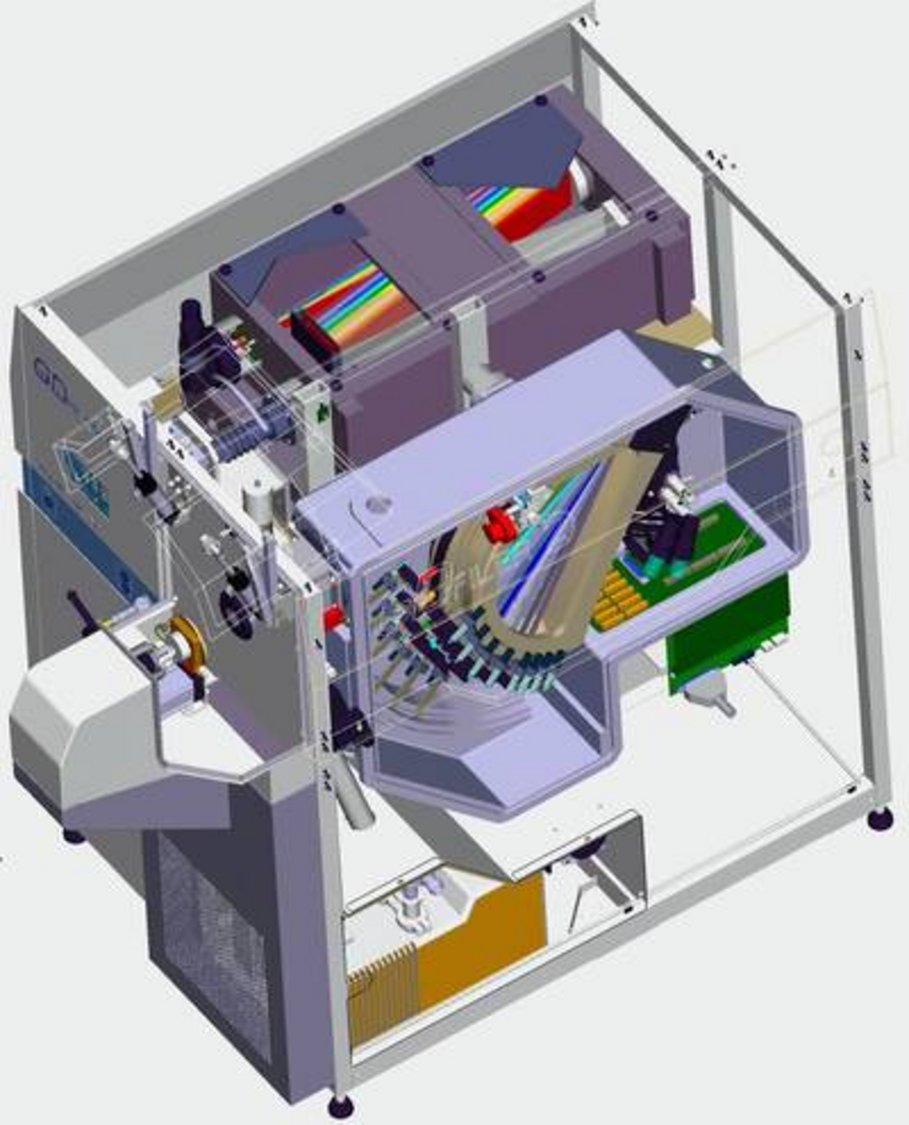


Combined optics can also be found with monochromators added in complement to the polychromators. Being flexible, the monochromators could be tuned to any line and offer the possibility to measure extra elements with high resolution and sensitivity.

CCD systems are also available from HORIBA Scientific but limited to bulk applications or thick layers as they do not have the speed required for thin films characterisation.
 

Thickness Measurement using Depth Interferometry


The use of Differential Interferometry allows for continuous direct erosion rate and crater depth measurement along with the elemental depth profile analysis. This technique developed and patented by HORIBA Scientific is a major breakthrough for GD-OES as all the information, elemental composition and depth is now delivered in the same single experiment.
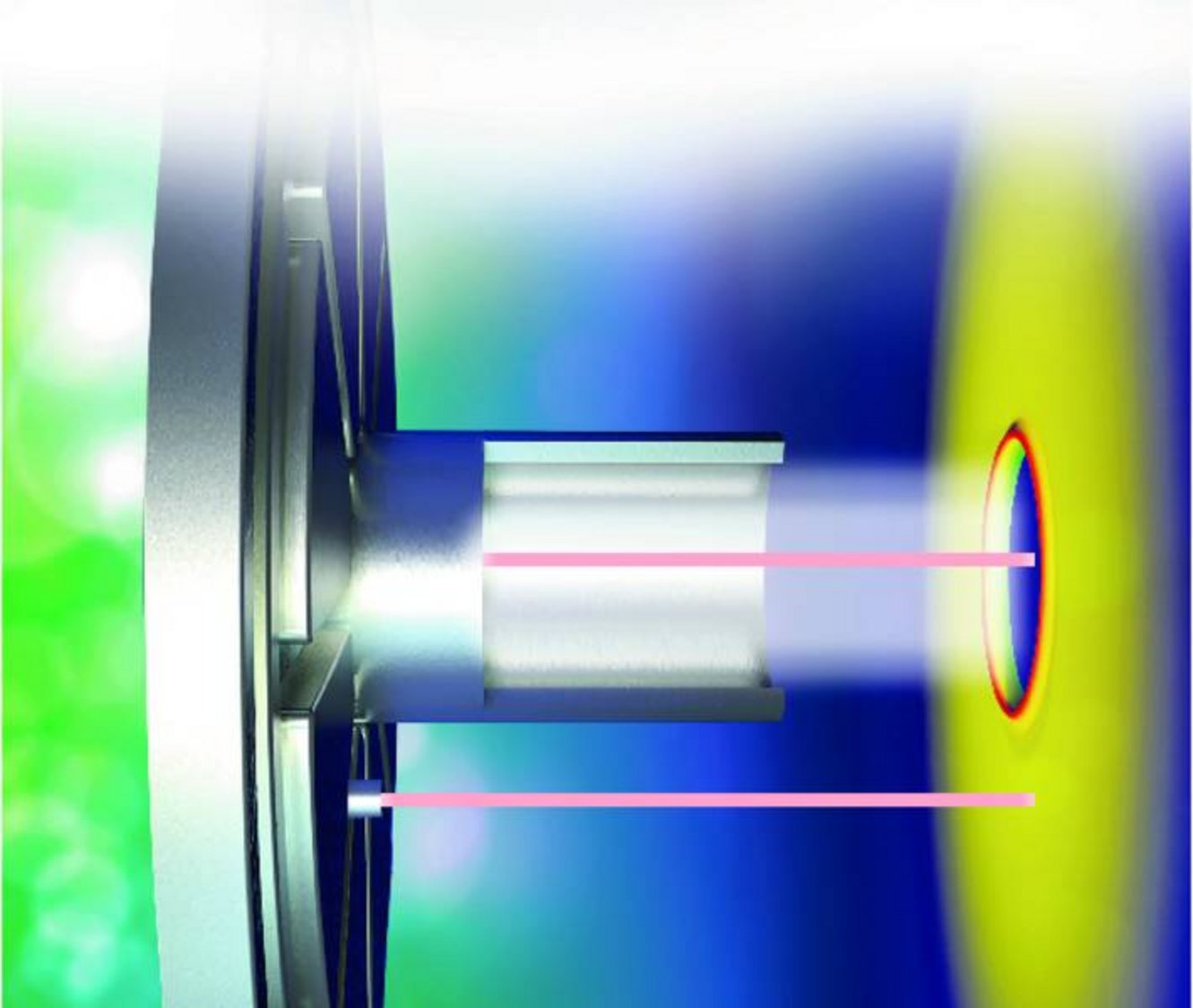


The erosion rates in GDOES are material dependent, and when multi-layers are measured, they change with depth. Previously, the estimation of these erosion rates was the result of calculations (based on recorded values for bulk materials and not well adapted to layers with varying densities) or external measurements potentially tedious.

DIP is crucially important when the investigated materials are non transparent as, in this case, Ellipsometry cannot be used.
  • Control of deposition processe
    DIP & GD provides precise layer thickness information for deposition experiments together with the follow up of the main constituent elements (composition, gradients) and the detection of contaminants.
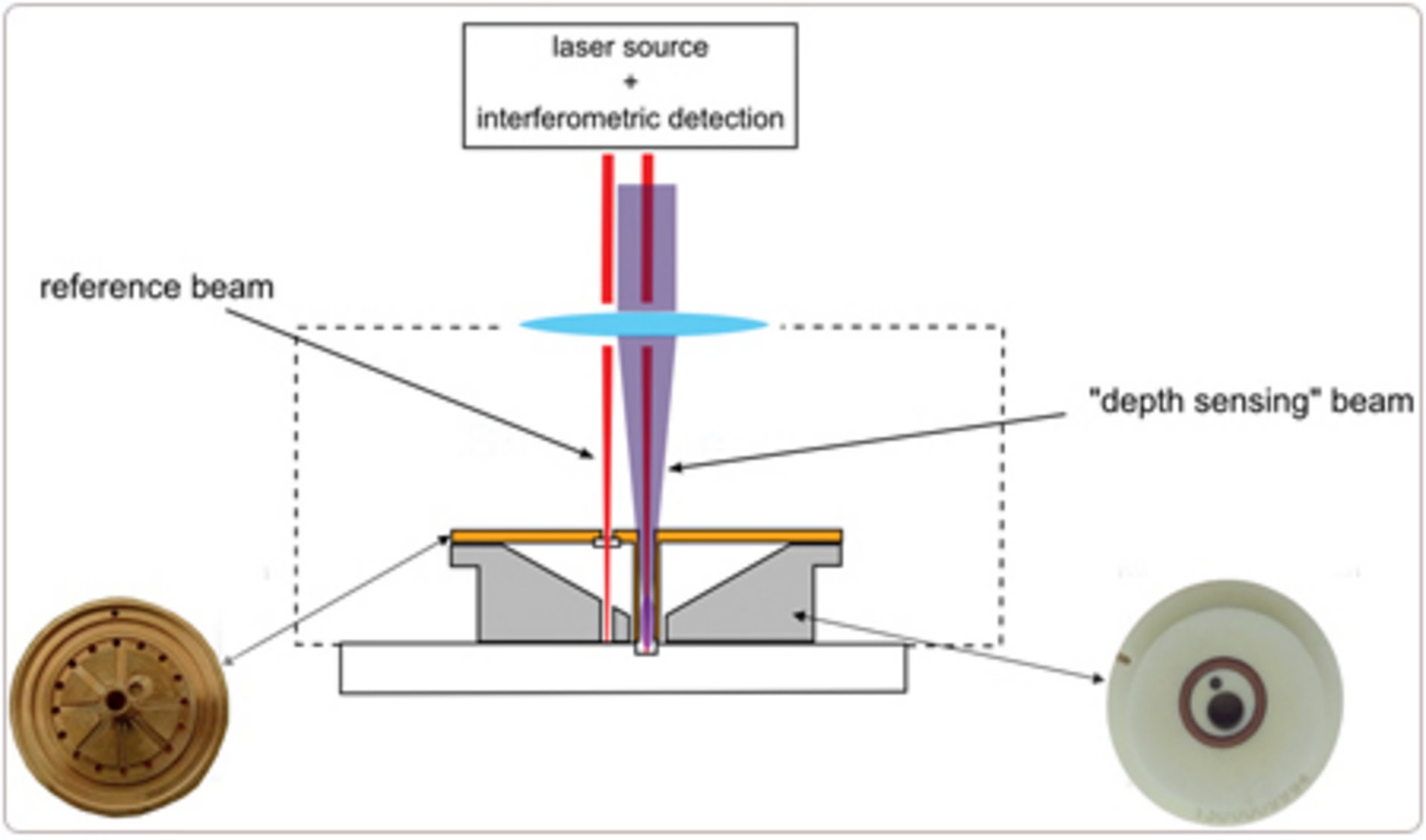
  • DiP operation principle: Interferometric measurement


  • A laser source is separated into two beams: The reference one is directed on the intact surface of the sample, while the depth sensing one is directed on the middle of the GD measured area.
  • The interference between the two reflected beams is measured as the sample is sputtered, giving a direct measurement of the crater depth.
  • Upgrade existing GD instruments
    DiP can be retrofitted on existing instruments as the design of the optical interface does not modify the light throughput towards the spectrometers.


  • 产品
    • 全部产品
    • 汽车
    • 能源与环境
    • 生命科学
    • 医疗
    • 先进材料
    • 半导体
  • 应用
    • 饮用水处理监测
    • 汽车制造
    • 半导体制程
    • 研究所及分析测试中心
  • 技术
    • 辉光放电光谱
    • 四级质谱
    • 拉曼光谱
  • 服务
    • 现场支持
    • 备件和易耗品
  • 企业
    • 新闻
    • 活动
    • 招聘
    • 历史
    • 企业文化
  • 联系
    • 招聘联系
    • 联系表
    • 全球分公司
    • 投资者关系

条款和条件 隐私声明 HORIBA Group Social Media