Dr. Yoshinori Takano, JAMSTEC
Since our founding, HORIBA has tackled social challenges by using measurement and analysis technologies, which are the essential foundation for scientific, technological and industrial advancement.
Wanting to help lots of people discover the fun and possibilities of measurement and analysis, we held a “Science Seminar where Measuring Finds the Answer” on August 21st, 2025.
The topic of this seminar was space.
HORIBA’s measurement and analysis technologies go beyond familiar aspects of daily life, such as testing tap water quality. They have the power to solve the mysteries of space.
At the seminar, we welcomed Dr. Yoshinori Takano of the Japan Agency for Marine-Earth Science and Technology (JAMSTEC), who collaborated with HORIBA on the Hayabusa2 research project. He gave a lecture on the appeal of space science and the enjoyment of measurement and analysis.
The lecture began by asking Dr. Takano a simple question: "What made you interested in space?" He shared his journey to becoming a scientist, his encounter with HORIBA, how he brought back samples from asteroid Ryugu, the challenges and hardships leading up to analyses, the highlights of scientific achievements he gained through the project, teamwork with invaluable colleagues, and his outlook for the future.
JAMSTEC aims for a comprehensive understanding of the oceans, the Earth, and the anthroposphere. Within this framework, Dr. Takano conducts research and development to visualize the invisible and unravel the laws of nature. Discovering unknown substances and components requires meticulous preparation and often involves challenges; however, Dr. Takano recalls that the sense of accomplishment and exhilaration when a project succeeds is immeasurable.
He added, "When core HONMAMON technology is combined with the world's finest samples, we gain insights we have never seen before." We believe that his appreciation for HORIBA's Spirit of HONMAMON and technological capabilities led to advance our research together.
* The Japanese word originally means authentic. At HORIBA, the term goes beyond and represents the eternal pursuit of creating something from the heart that is one-of-a-kind.
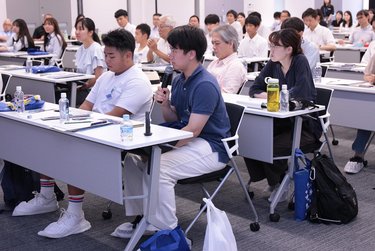
Dr. Takano vividly described the process and behind-the-scenes stories of recovering and analyzing the samples after they returned to Earth, which captivated the audience and sparked even greater interest. Participants shared feedback such as:
"Dr. Takano’s passion that made him venture beyond Earth to understand it was awesome,"
"Dr. Takano talking about researching from genuine curiosity moved me deeply," and
"I found it very helpful in deciding my own career path."
During breaks and after the seminar, junior high school, high school, and university students approached Dr. Takano to discuss their career paths and research topics, filling the entire venue with an enthusiastic atmosphere.
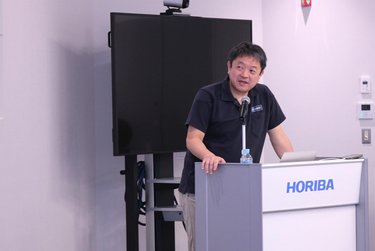
In the second half of the seminar, a HORIBA employee shared stories about trying to analyze minute and unknown samples from Ryugu and about the tension and excitement he felt, as he conveyed the fascination of measurement and analysis.
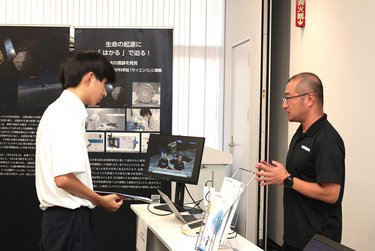
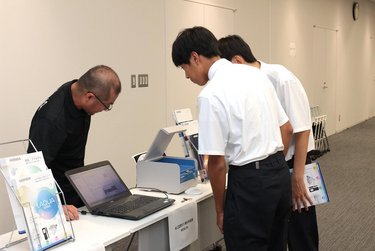
Analytical equipment actually used in the project and a model of Hayabusa2 were also on display at the venue, which participants eagerly examined.
The vast field of space research requires knowledge and technology to be passed down through multiple generations in order to unveil the unknown. This is why it is often called a two-generation project.
Dr. Takano says that this is precisely why the presence of future scientists and engineers is so important.
"Be curious, find something you can lose yourself in, and pour your heart and soul into it." This was a powerful message for the next generation.
Dr. Takano conveying a message to the younger generation.
We will continue to convey the appeal of measurement and analysis technologies and contribute to creating opportunities for the younger generation to challenge themselves in the world of science.
Group photo with Dr. Takano