Back to Nobel Laureate Connections

Gérard Mourou, Ph.D.

Credit: Nobel Prize Outreach. Photo: A. Mahmoud

High-Powered Lasers

Gérard Mourou, born 1944, is a French physicist and a world-renowned pioneer in the field of ultra-fast lasers. His career has been marked by a relentless pursuit of higher laser intensity, leading to an invention that revolutionized optics and opened the door to applications in medicine, manufacturing, and fundamental physics. He has held distinguished positions at institutions including the University of Rochester, the University of Michigan, and the École Polytechnique.


Nobel Accomplishments: Chirped Pulse Amplification (CPA)

In 2018, Gérard Mourou was awarded a share of the Nobel Prize in Physics (along with his former graduate student, Donna Strickland) for their method of generating high-intensity, ultra-short optical pulses. This method is known as Chirped Pulse Amplification (CPA).

Before CPA, scientists were limited in how much they could amplify a short, intense laser pulse. Attempting to directly amplify a powerful, ultra-short pulse would inevitably destroy the laser's amplifying material, as the peak power was simply too high.

The idea for CPA struck Mourou on a ski lift in the cold winter of Rochester, New York. The technique, established in 1985, is described as elegantly simple:

  1. Stretch: An initial short laser pulse is sent through a pair of diffraction gratings. These gratings spread out the pulse in time (like an optical chirp, where the frequency changes over time), reducing its peak intensity by a factor of up to 100,000 times. This makes the pulse safe to handle.
  2. Amplify: The low-intensity, long-duration pulse is safely amplified to a much higher energy level.
  3. Compress: The amplified pulse is passed through a second, matched pair of diffraction gratings. These gratings reverse the process, re-combining all the wavelengths into a single, ultra-short pulse.

The result is a pulse that is both ultra-short (down to the femtosecond range) and incredibly powerful, reaching the petawatt range with an intensity impossible to achieve before CPA.
Transformative Applications of CPA

The invention of CPA became the new standard for high-intensity lasers globally, enabling a "laser revolution" with far-reaching applications:

  • Medicine (LASIK): A famous mishap in Mourou's University of Michigan lab—where a student's eye was accidentally hit by a CPA laser, causing a perfectly clean injury—revealed the laser's potential for ultra-precise surgery. This led to femtosecond ophthalmology, making precision LASIK and cataract surgery possible.
  • Cancer Treatment: CPA lasers are used to speed up protons for proton therapy, allowing for the precise targeting of deep tumors with minimal collateral damage to surrounding healthy tissue.
  • Manufacturing: The precision and speed of the ultra-short pulses are used for micromachining, including the precise cutting of brittle materials like smartphone screens and the manufacturing of surgical stents.
  • Fundamental Physics: CPA-enabled lasers allow scientists to study chemical reactions at the molecular level, mimic extreme plasma conditions found near supermassive black holes, and are being explored for radiological mediation (a process Mourou is actively involved in) to drastically shorten the lifespan of nuclear waste.

The Crucial Role of HORIBA Gratings

A critical part of the CPA breakthrough was the final design of the stretcher and compressor, which required the use of diffraction gratings for both steps to ensure a perfect match.

The Initial Limitation: Mourou's initial 1985 CPA demonstration used small gratings for the compressor and a fiber cable for the stretcher. This mismatch limited the efficiency and power output of the final pulse.

The Technical Leap: To scale up the power, Mourou needed much larger, more robust, and highly efficient gratings for both the stretching and compression stages. He collaborated with Jobin Yvon (now HORIBA France) to develop these specialized components.

HORIBA's Contribution

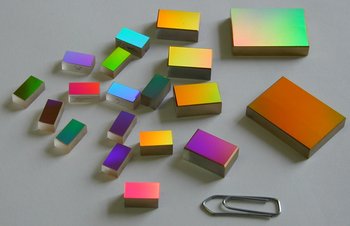
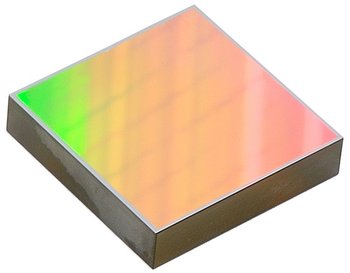
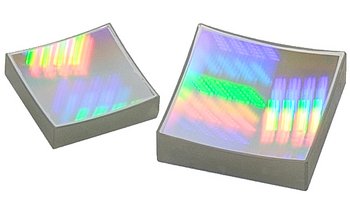
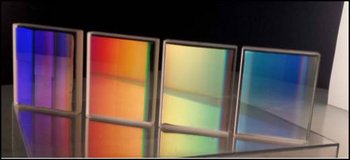
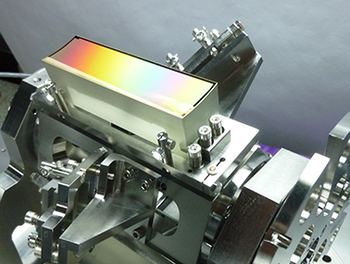
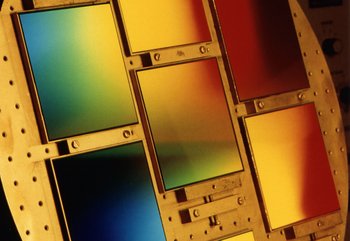
HORIBA developed gratings that were huge by the day's standards (190 mm by 350 mm), about 25 times larger than the commercial norm. This size increase directly allowed for a proportional increase in the laser pulse energy. They also developed specialized gold-coated surfaces with a high damage threshold and high efficiency (over 90%), which was essential because the laser beam bounces off four gratings, magnifying any loss to the fourth power.

The combination of the gratings' large size and robustness was the key that unlocked the high-intensity, petawatt-class lasers. This essential component was deemed so important that when asked to provide an item to commemorate his Nobel Prize, Mourou chose to display one of the original HORIBA (Jobin Yvon) diffraction gratings at the Nobel Museum in Stockholm, recognizing it as the critical breakthrough that made true high-power CPA possible.

Related Products

全息平面光栅
全息平面光栅

OEM光栅设计和生产能力

闪耀全息平面光栅
闪耀全息平面光栅

OEM光栅设计和生产能力

刻划平面光栅
刻划平面光栅

OEM光栅设计和生产能力

全息凹面光栅I型-罗兰圆光栅
全息凹面光栅I型-罗兰圆光栅

OEM光栅设计和生产能力

平场成像光栅-Type IV
平场成像光栅-Type IV

OEM光栅设计和生产能力

单色仪型光栅
单色仪型光栅

OEM光栅设计和生产能力

激光脉冲压缩光栅
激光脉冲压缩光栅

使用全息技术的脉冲压缩光栅

航天用光栅
航天用光栅

Space qualified和 TRL9

留言咨询

如您有任何疑问,请在此留下详细需求信息,我们将竭诚为您服务。

* 这些字段为必填项。

Corporate